24/7 Referral Service — Connecting Homeowners with Independent HVAC Professionals
Gyanesh Gulshan — Founder of Cool Call Pro LinkedIn

Author & Contributor

Gyanesh Gulshan

Founder & Editor-in-Chief, Cool Call Pro

Gyanesh Gulshan is the founder and editorial lead of Cool Call Pro, a nationwide HVAC referral network that connects homeowners with independent service professionals. He holds a B.Tech in Mechanical Engineering — the academic discipline that underlies HVAC design itself: thermodynamics, heat transfer, the refrigeration cycle, and fluid mechanics. Every article on this site is informed by that foundation and by the service-request data flowing through Cool Call Pro's referral network across 50+ U.S. markets. He is not a licensed HVAC contractor and does not install, repair, or service equipment. His role is editorial: to explain, in plain language, what homeowners are actually looking at — so they can hire the right technician, ask the right questions, and avoid the wrong repair.

🎓 B.Tech Mechanical Engineering 🏠 Home Services 🔧 HVAC Referral Networks 💰 Repair Cost Analysis 🚨 Emergency Response

Last Updated: May 2026  ·  36 articles published
Honest Limitations — What I Am Not

  • I do not hold an HVAC contractor license in any U.S. state.
  • I do not hold NATE certification or EPA Section 608 refrigerant-handling certification.
  • I am not a substitute for a qualified technician for any specific diagnosis or repair decision. On-site inspection by a working professional always takes precedence over anything written here.
  • I am the editorial voice behind this site, not a field technician. My articles explain how HVAC systems fail, what repairs typically cost, and what questions to ask — they do not tell you to touch refrigerant, open electrical panels, or work on gas equipment.

Areas of Expertise

🚨

HVAC Emergency Response

Understanding how to respond to HVAC emergencies — gas leaks, carbon monoxide, no heat in winter — and how referral networks connect homeowners to help fast.

💰

Repair Cost Transparency

Breaking down what HVAC repairs actually cost by problem type, region, and urgency — so homeowners can make informed decisions without being blindsided.

🏠

Home Services Networks

Expertise in how home services referral platforms work, how independent contractors are connected to homeowners, and what consumers should expect from the process.

My Editorial Approach

How I research and write about HVAC topics — and why it matters for homeowners.

🔍 Consumer-First Research

Every article is written from the homeowner's perspective — what is actually happening, what it will cost, and what to do next. I don't write to upsell; I write to inform.

📊 Real Cost Data

Cost ranges are based on aggregated industry data, contractor pricing surveys, and the service requests processed through Cool Call Pro's referral network across 50+ U.S. markets.

✅ Transparent About What We Are

Cool Call Pro is a referral service, not a repair company. Every article discloses this clearly. Readers always know who is providing the information and why.

🛡️ Audit-Enforced Fact Discipline

Every article runs through an automated audit script (audit_article.py --strict) before publication. It enforces a safety-phrase blocklist (no dangerous DIY instructions), a cost-drift check against our canonical pricing page, YMYL caveats for tax and financing claims, and schema validation.

💵 Canonical Pricing Source

All cost figures are defined on the /costs page first and then referenced by articles. One source, no drift. If market pricing shifts, we update /costs and every article is re-checked against it.

⛔ Safety Boundaries We Refuse to Cross

We never tell a reader to handle refrigerant (federally regulated under EPA Section 608), open an electrical service panel, discharge a capacitor, bypass a safety switch, or work on gas connections. These are technician-only tasks, and our articles redirect to a professional for every one of them.

Why a Referral Site Can Say Things a Contractor's Blog Cannot

Most HVAC content online is written by contractors. That alignment has a specific bias: contractors make money when homeowners agree to the repair or replacement in front of them. Their blogs rarely flag red-flag pricing patterns, aftermarket leak-sealant upsells, or phantom refrigerant top-offs — because calling those out would cost them work.

Cool Call Pro is a referral service. We do not perform HVAC work. Our incentive is different: homeowners who feel well-informed return to the network and refer others. That is why this site can warn readers about the most common scam patterns, show them how to read a quote line-by-line, and tell them when a $1,000 repair on a 12-year-old system is the wrong call.

Full disclosure: we are paid when a call results in a service connection. We are not paid by any individual contractor to promote their services. Our advertising disclosure appears on every article.

How Pricing Data Is Sourced

Every cost range on this site is published on the /costs page first, then referenced by articles. The figures draw from:

  • Aggregated service-request pricing from Cool Call Pro's referral network across 50+ U.S. metro areas.
  • Published U.S. Bureau of Labor Statistics data on HVAC mechanic and installer wages (BLS OOH).
  • ENERGY STAR and U.S. Department of Energy published cost and rebate references (ENERGY STAR tax credits, DOE rebates).
  • Contractor price surveys and publicly available pricing data.

Pricing ranges are estimates. Actual costs vary by region, provider, system age, and local code requirements. Always confirm pricing directly with the technician who inspects your equipment.

Articles by Gyanesh Gulshan

A homeowner standing on the front lawn of a suburban home in evening light looking back at the house with a concerned expression, with the front door still open behind them, illustrating the correct first-60-second response to a suspected gas leak or carbon monoxide alarm: evacuate first, call 911 or the gas utility from outside, before doing anything else inside the home

Gas Leak vs CO Leak: Telling Them Apart in 60 Seconds

C6 cluster — C6 cluster -- the four signals that distinguish a natural gas leak from a carbon monoxide exposure (smell, symptoms, detector type, source), the first-60-second response for each, the homeowner mistakes that turn either emergency worse, and the HVAC equipment most likely to be the source.

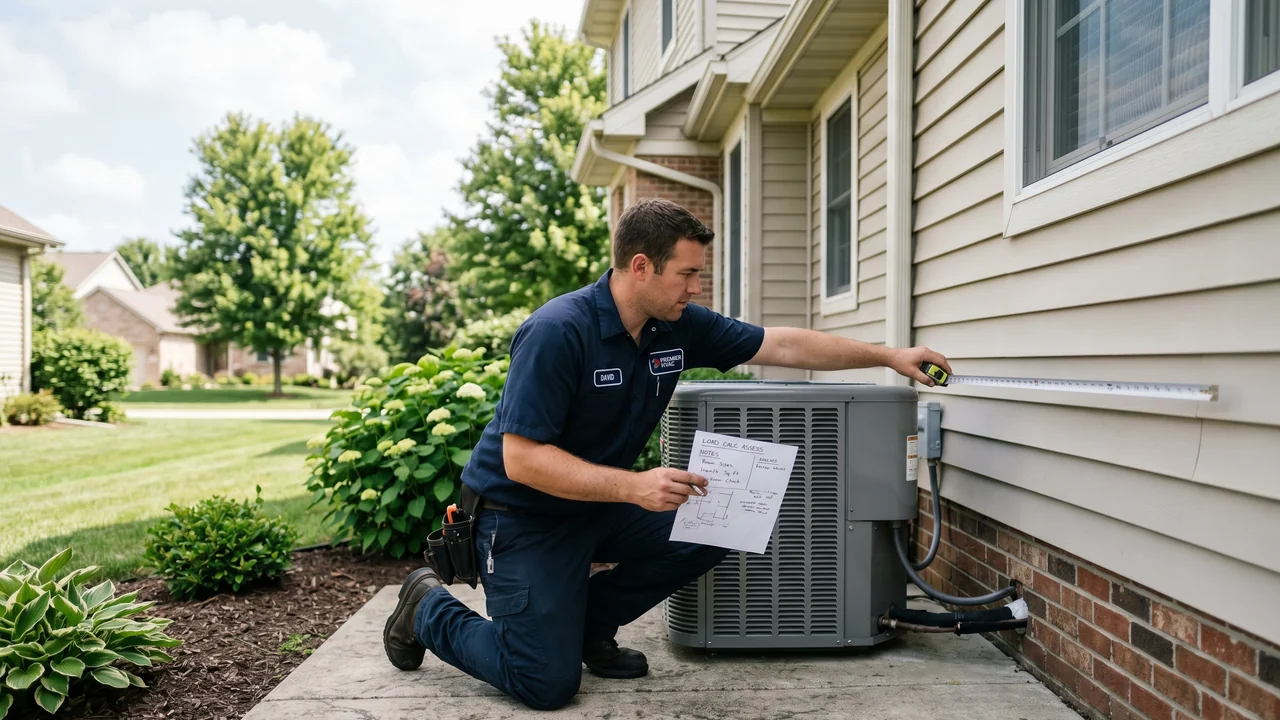
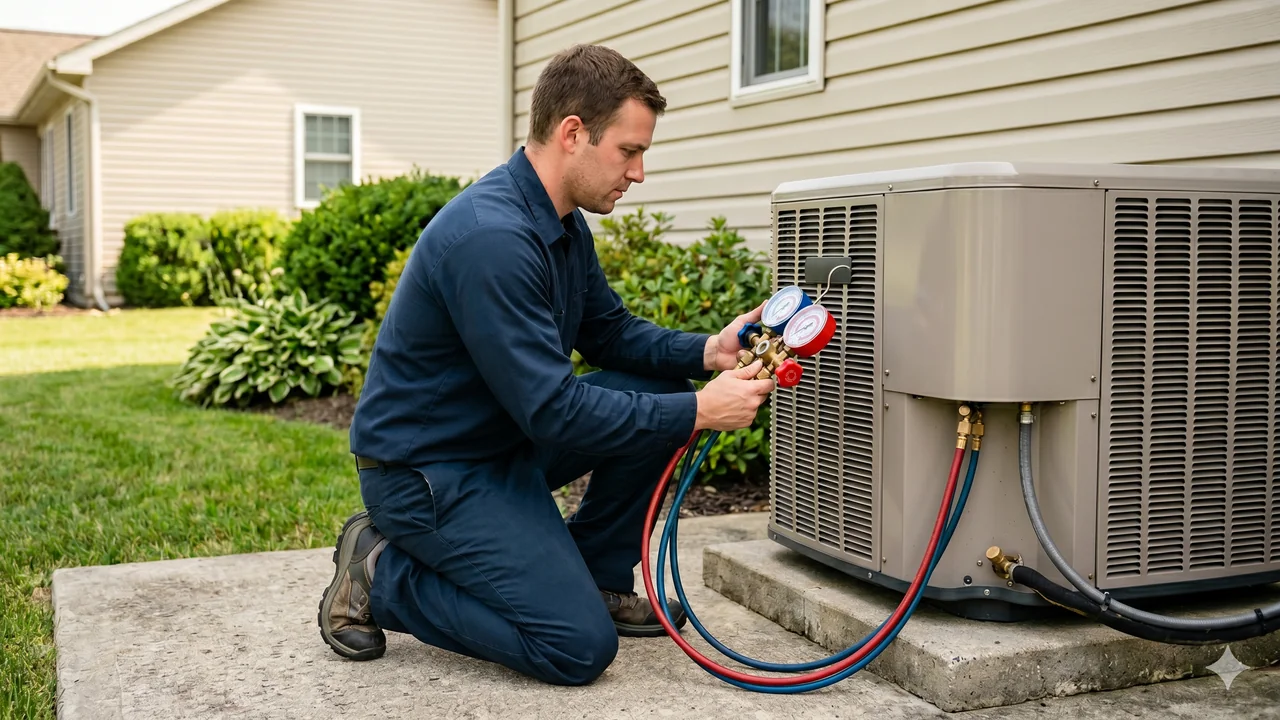
HVAC technician kneeling on a concrete pad next to a residential outdoor heat pump unit and the side of a suburban two-story home, holding a paper printout with annotations and a measuring tape against the wall, illustrating the on-site assessment phase of a Manual J residential load calculation before equipment is quoted

How to Size a Heat Pump (and Why BTU Per Square Foot Is Wrong)

C3 cluster — C3 cluster -- why contractor rule-of-thumb sizing fails, what ACCA Manual J actually calculates, the three specific costs of oversizing (short-cycling, failed dehumidification, higher install+operating cost), and the three-ask homeowner workflow for verifying a heat pump quote.

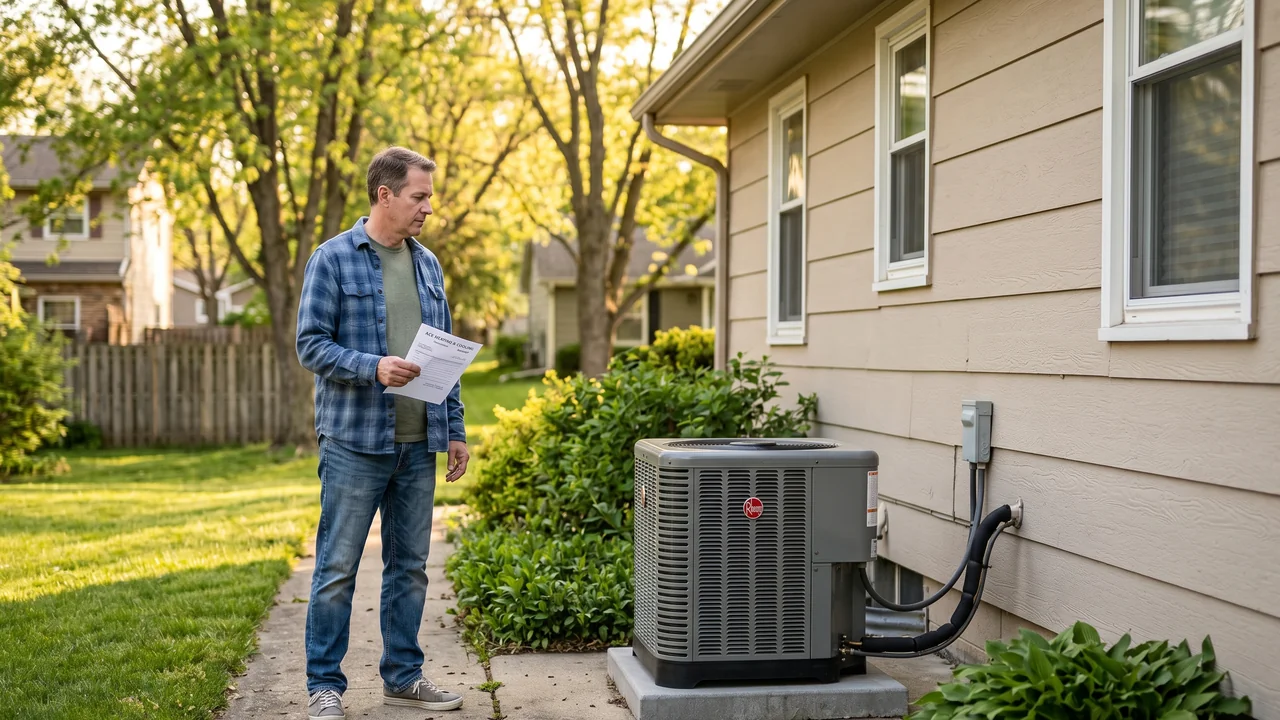
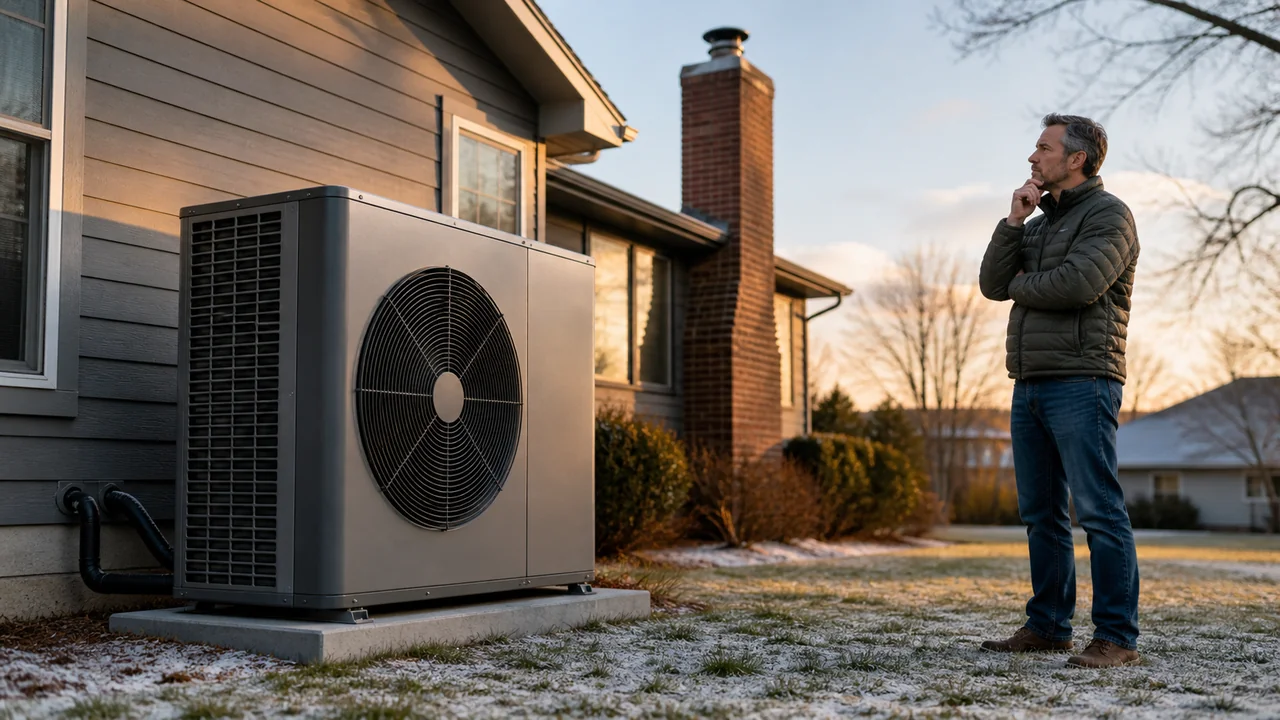
Homeowner in casual weekend clothes standing in a suburban side yard at golden hour, looking thoughtfully at a residential outdoor HVAC heat pump unit on its concrete pad against the side of a two-story home, holding a paper contractor quote in one hand, illustrating the 2026 homeowner decision of whether to switch from a gas furnace to a heat pump
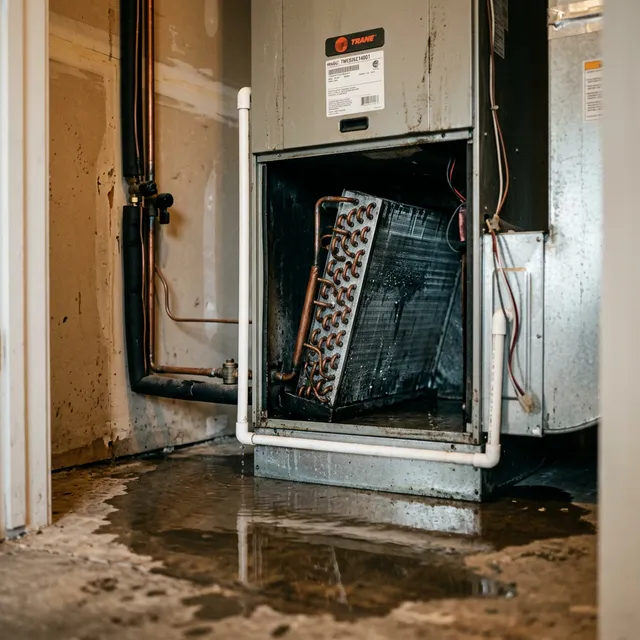
Should I Switch From a Gas Furnace to a Heat Pump?

C3 cluster — A 2026 decision tree for switching from a gas furnace to a heat pump: six questions on climate zone, electricity-vs-gas pricing, furnace age, panel capacity, HEAR rebates, and dual-fuel strategy — plus the honest scenarios where staying with gas is the right answer.
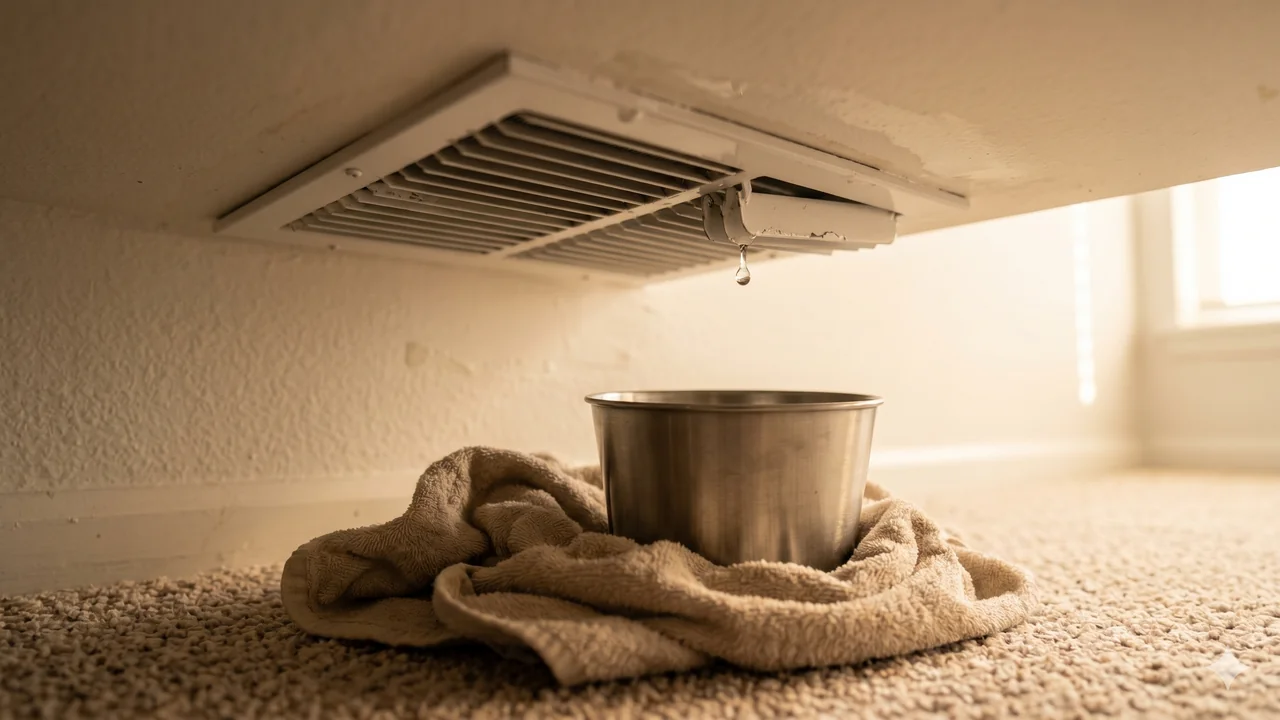
Close-up of a residential ceiling supply air register with a visible drop of water forming on the white metal louvers about to fall onto a beige carpet below where a stainless steel bucket has been placed to catch the drip, soft afternoon light through a nearby window, warm-toned interior

Water Dripping from Ceiling Vent? Causes

C1 cluster — Water from your AC vent is a same-day problem — every hour compounds ceiling damage. Turn the thermostat off, catch the drip, call a pro. The 5 causes and a step-by-step response.

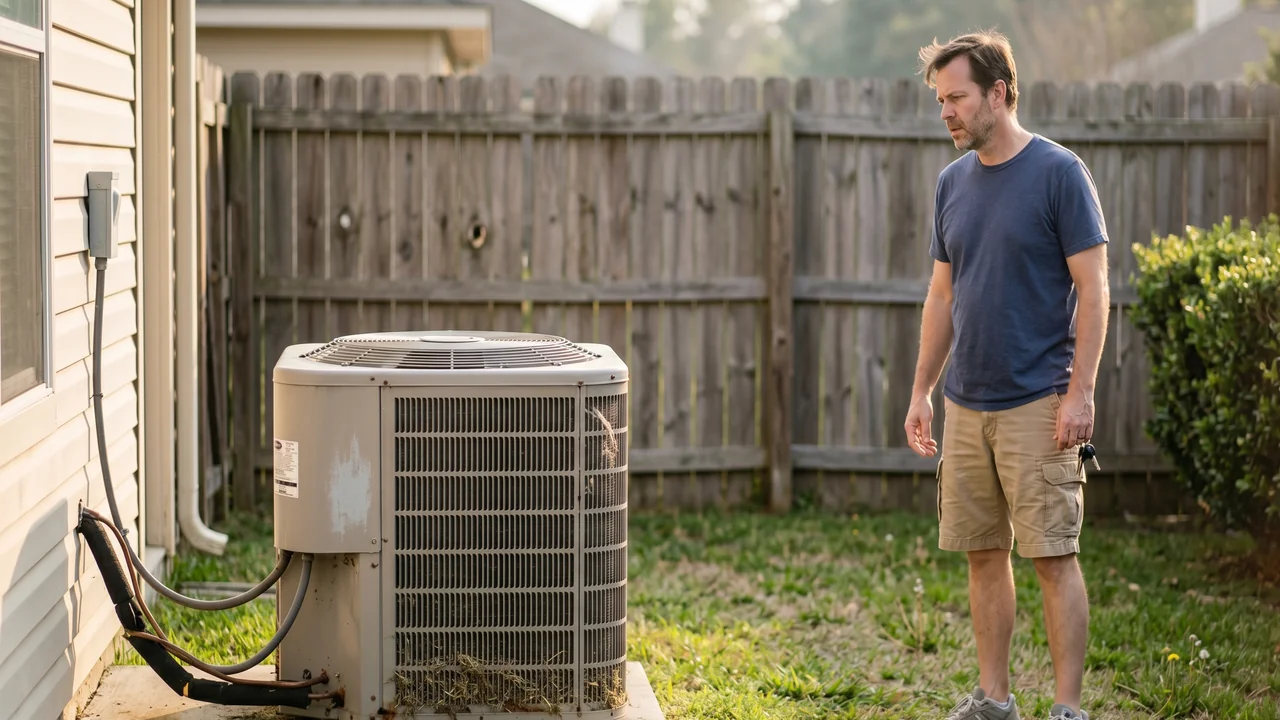
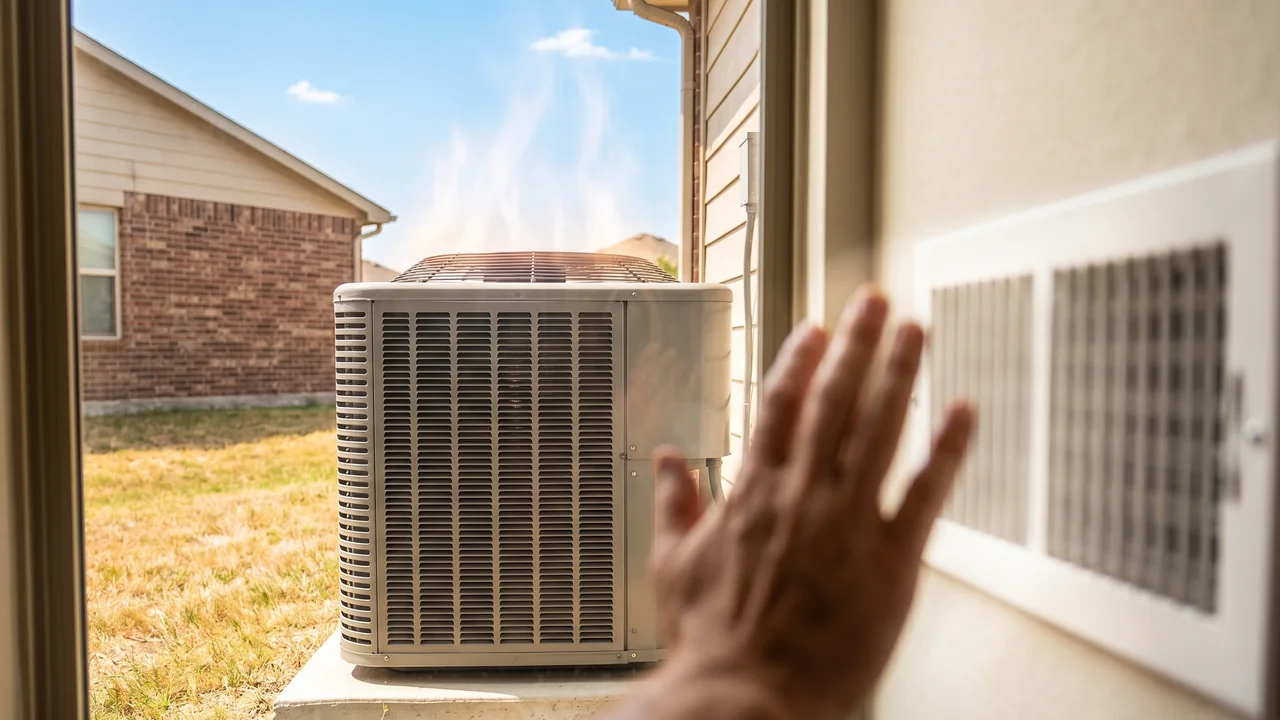
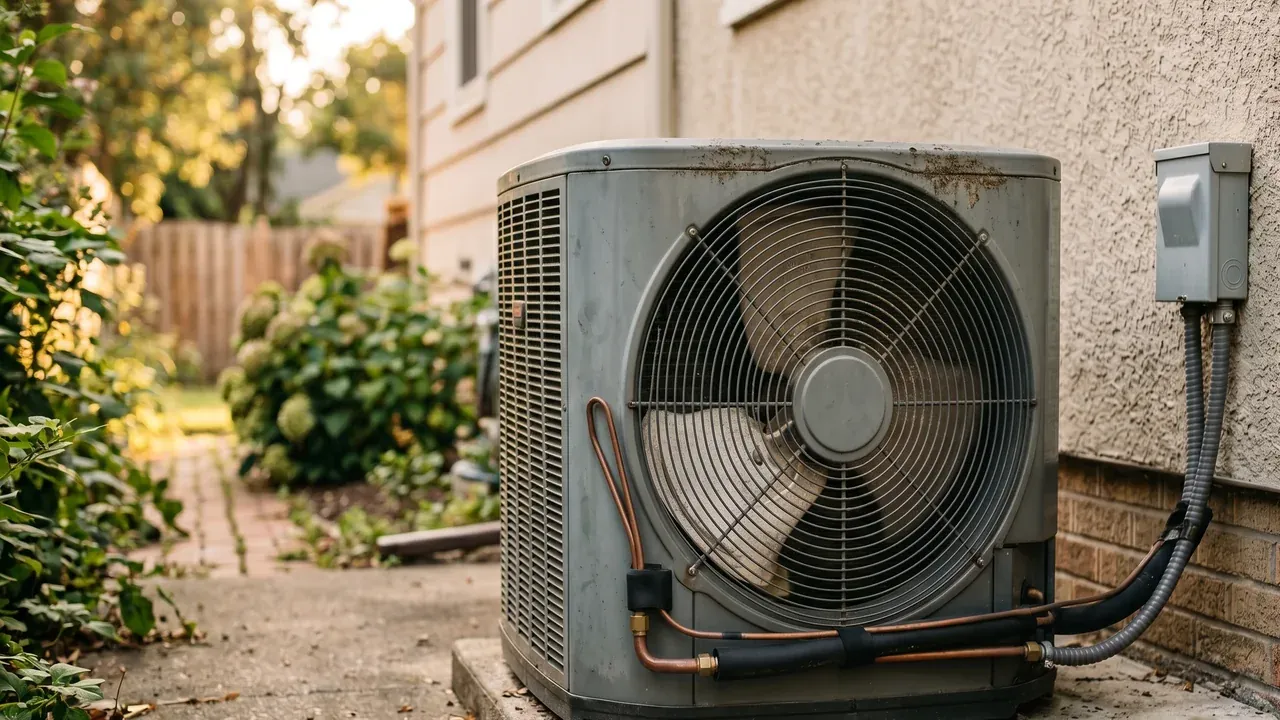
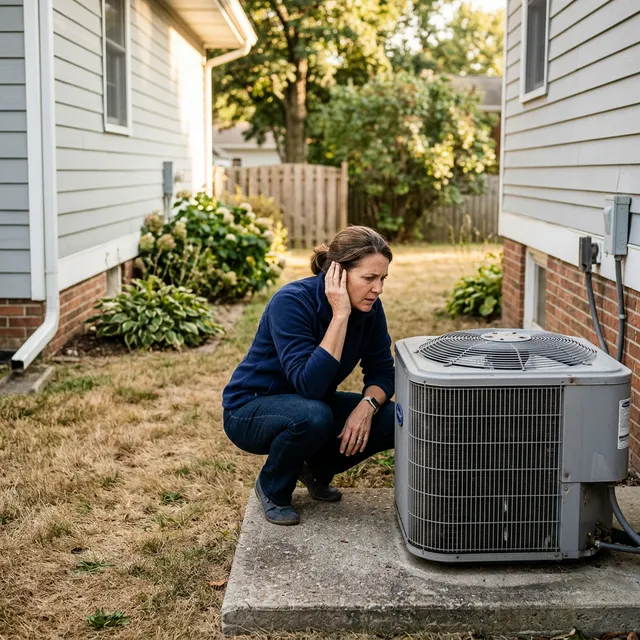
Residential outdoor AC condenser unit on a concrete pad beside a suburban home in summer afternoon light — the cabinet is closed and undisturbed while a homeowner stands back at a safe distance listening to a faint rhythmic clicking coming from inside, no hands touching the unit

AC Contactor Clicking but Nothing Happens

C1 cluster — That rhythmic click from the outdoor unit is a 240V relay trying to start a system that won't. The 5 causes, why every click cycle hurts the compressor, and why it's a technician-only repair.

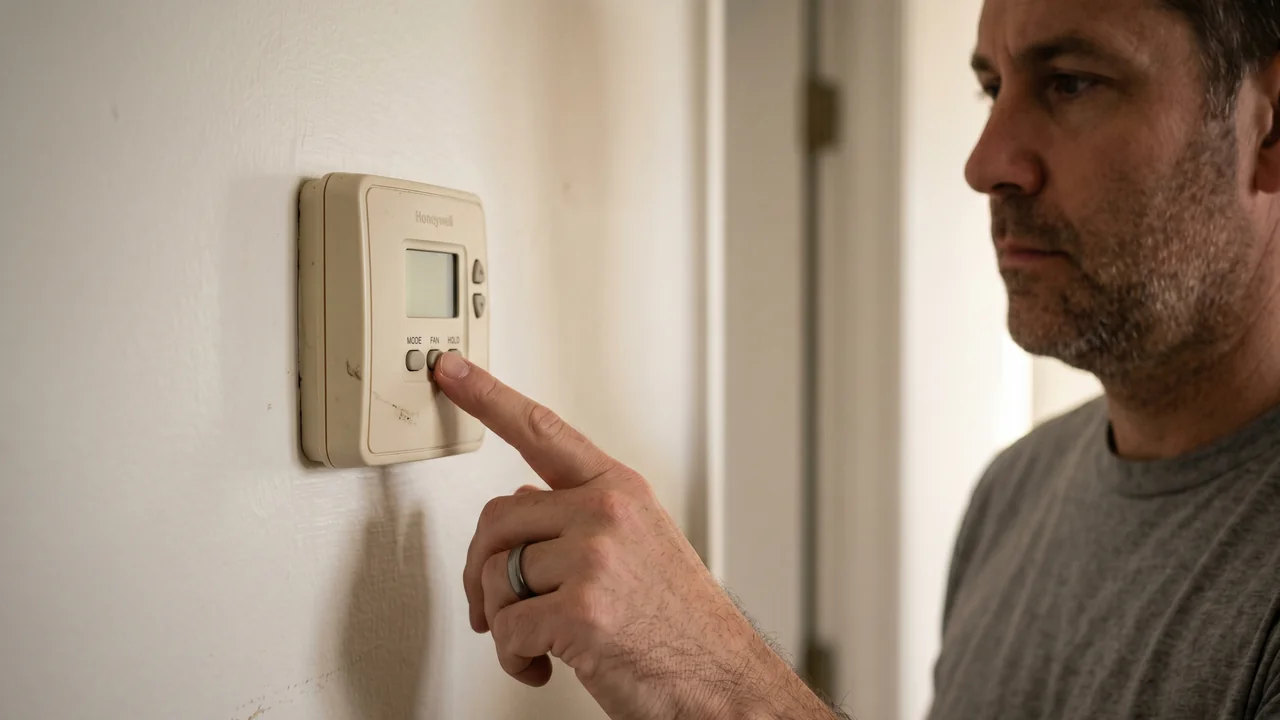
Close-up of a wall-mounted residential thermostat with a completely dark LCD screen and a homeowner's hand approaching the sliding battery cover to replace the AA cells — beige interior wall, soft indoor lighting, no visible UI text on the blank display

Thermostat Blank, AC Won't Turn On? Fixes

C1 cluster — Dead batteries solve 7 of 10 cases. The other 4 root causes (float switch, blown 3A fuse, dead transformer, failed thermostat) and why everything past the battery swap is technician work.

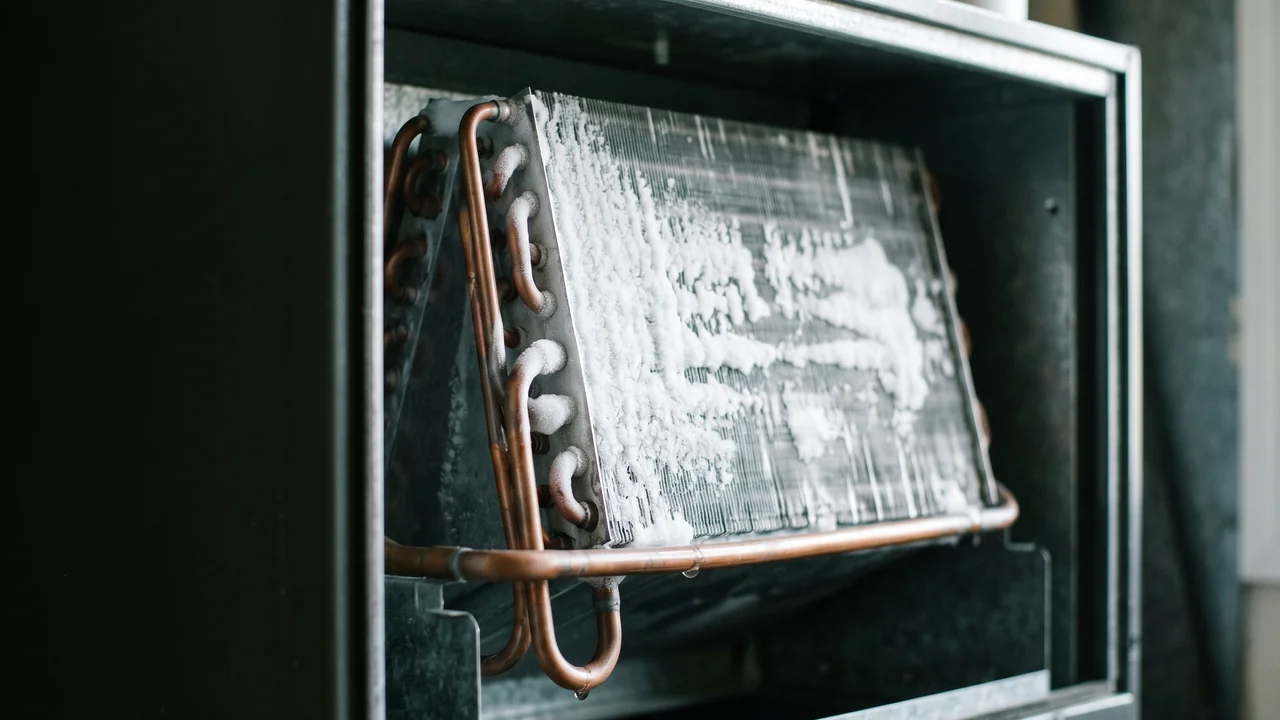
Close-up of a residential indoor air handler evaporator coil with a visible layer of frost and ice buildup on the copper refrigerant lines and aluminum fins, suggesting a frozen AC system during a humid summer afternoon

AC Freezing Up in Summer? Ice on Coils

C1 cluster — Turn it off, switch the fan on, wait 2–4 hours. The 5 root causes of a frozen AC, safe DIY steps, and when to call a technician before it becomes a compressor replacement.

24/7 Service Available

Need HVAC Help Right Now?

Call our referral line to be connected with an independent HVAC professional in your area.

📞 Call Now — (844) 582-1795

Cool Call Pro is a referral service. We connect you with independent contractors — we do not perform repairs.

Call Now — (844) 582-1795