Carbon Monoxide: The Invisible Killer in Your Home
A cracked heat exchanger can leak lethal CO into your home silently. Learn the symptoms, detector placement, and exactly what to do when your alarm sounds.
Review the safety precautions below, then connect with an independent HVAC provider for assistance.
Disclosure: This website is a referral and information service. The line is free to call; we may connect you with independent HVAC providers and may receive compensation if you call. Calls may be routed to an independent provider network and may be recorded. Providers set their own diagnostic and after-hours fees (see typical fees). We do not provide HVAC services directly.
Jump to your emergency ↓
Tell us what's happening so we can connect you with the right independent HVAC provider for your situation.
We collect your location, system type, and issue details so we can share them with a provider in your area.
We connect you with an available independent provider in your area. Response time varies by location and demand.
HVAC failures don't wait for business hours. Cool Call Pro routes your call to an independent HVAC provider that offers emergency response — including 24 hour HVAC repair, same-day AC repair, after-hours furnace service, and weekend heat pump calls. Availability varies by ZIP code and current demand.
Some independent providers in the Cool Call Pro network offer round-the-clock emergency response, depending on your area. An on-call technician may be dispatched overnight for total heat loss in winter, total AC failure during heat advisories, water leaks threatening equipment, or a carbon monoxide detector alarm (after 911 has been called). Overnight dispatch fees and minimum service charges are set by the individual provider, not Cool Call Pro.
Whether same-day service is possible depends on local provider availability, the time you call, the distance to your ZIP code, and current demand. When you call the service line, the provider gives you an arrival window based on their current queue.
Some providers offer emergency HVAC service after normal business hours, on weekends, and on federal holidays. Expect a surcharge for weekend, holiday, or overnight dispatch — the exact amount is set by the individual provider. Per our cost guide, a diagnostic or service-call fee typically runs $65–$150, and night, weekend and holiday calls add $100–$300 on top of the repair cost. Some providers credit the diagnostic fee toward the repair; ask when you call. Confirm the diagnostic fee and any minimum service charge with the provider before they arrive.
This page covers six HVAC emergencies, with immediate step-by-step actions for each. For gas leaks, carbon monoxide, fire, or electrical shock — call 911 first. For all other HVAC failures — total heat or AC loss, water leaks, or sudden strange noises — use the number above to connect with an independent provider in your area. Do not attempt to open, repair, or modify any HVAC equipment yourself.
IMMEDIATE ACTIONS — IN ORDER:
Source: PGW natural gas safety guidance. Not sure whether it is gas or carbon monoxide? Read Gas Leak vs CO Leak: Telling Them Apart.
WHILE YOU WAIT FOR A PROVIDER:
HEAT SAFETY — DO THIS NOW:
SILENT KILLER — DON'T WAIT:
PREVENT FURTHER DAMAGE:
WHAT THE SOUNDS MEAN:
Every HVAC emergency is different. Here's what a provider looks for when you call about a specific system failure.
A provider checks for problems such as a failed capacitor, a burned-out compressor contactor, low or lost refrigerant, or a frozen indoor coil. A single-component repair (capacitor or contactor replacement) may be completed on the first visit if the technician has the part on hand. Compressor or evaporator-coil replacement is a larger repair that may require a return visit. See our cost guide for typical repair ranges.
A provider checks for problems such as ignitor failure, flame sensor fouling, gas valve faults, or failed blower-motor capacitors. For any carbon monoxide detector alarm, evacuate and call 911 before calling an HVAC provider. ENERGY STAR suggests talking to a contractor about replacement once a furnace is more than 15 years old, so for an older furnace ask the provider to explain repair-versus-replace options before you approve a major repair.
Two heat pump emergencies to watch for: total loss of heat in winter (possible causes include a failed defrost cycle, refrigerant loss, or a reversing valve issue) and a unit that runs but cannot maintain setpoint during a heat advisory. Heat pumps share most diagnostic paths with central AC, but the reversing valve adds complexity. A provider should verify refrigerant charge, capacitor health, defrost-cycle operation, and the reversing valve before recommending a major repair.
We will try to connect you with an independent HVAC provider who can help. Learn more about HVAC repair costs →
Call Now — (844) 582-1795Response times vary by location and demand.
Go deeper on the emergencies that bring homeowners to this page.
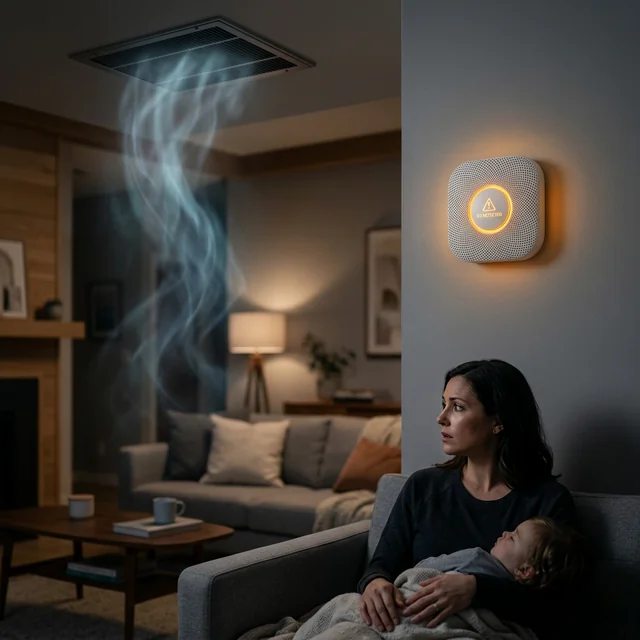 🔥 Safety
A cracked heat exchanger can leak lethal CO into your home silently. Learn the symptoms, detector placement, and exactly what to do when your alarm sounds.
 🚨 Emergency
Strange noises, burning smells, or weak airflow can escalate into dangerous emergencies. Know the signs before it becomes a crisis.
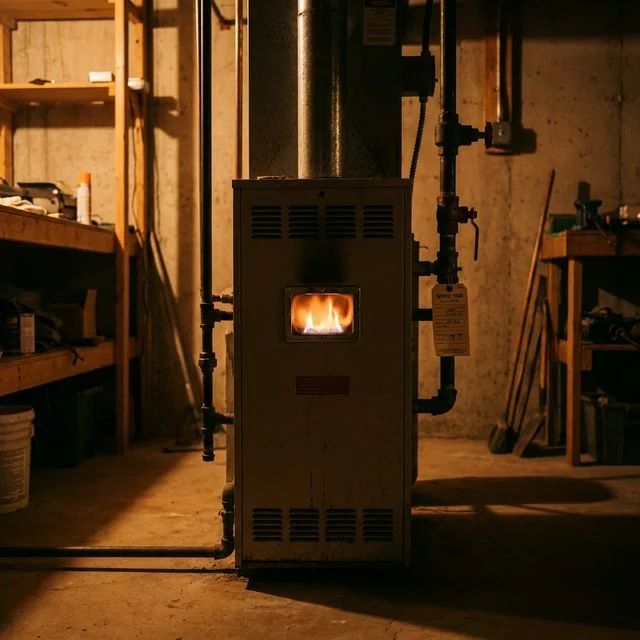 🔥 Safety
From faulty igniters to dangerous gas valve failures — what causes furnace ignition failure and when the situation requires immediate professional help.
 🛡️ Safety
The complete homeowner safety guide — gas leak protocols, CO prevention, what you can and cannot safely do yourself, and year-round prevention checklists.
Quick answers to the most common questions before you call.
Click or tap a question to expand.