
Advertising Disclosure: This site may receive compensation for service connections made through this page. Content is editorially independent.
Before opening any furnace cabinet or burner compartment, a technician will kill the breaker at the disconnect to de-energize the system — this is not a homeowner step. Refrigerant and sealed-system work is also federally regulated under EPA Section 608; certification is legally required.
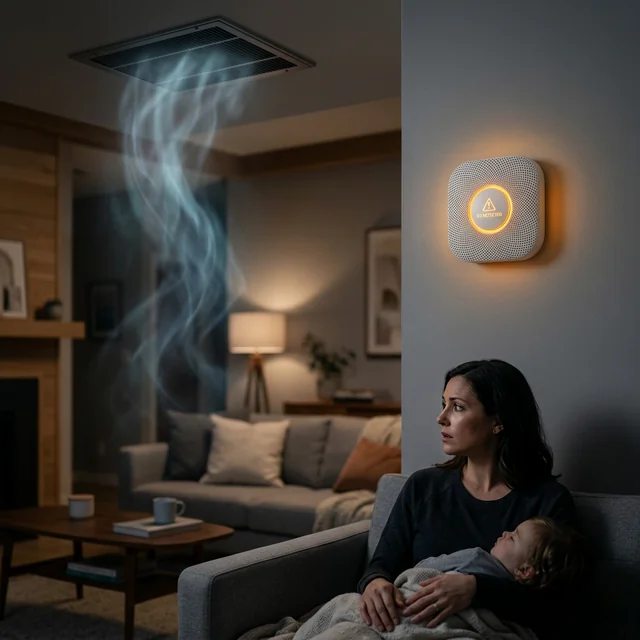
Carbon monoxide is colorless, odorless, and undetectable without a CO alarm. The CDC lists gas- and oil-burning furnaces among the household sources of CO, and a cracked heat exchanger is one way a furnace can leak it. Per the CPSC, symptoms become noticeable above about 70 ppm, and sustained levels above 150–200 ppm can cause unconsciousness and death. Install CO alarms on every level and outside sleeping areas. Our 2026 cost guide lists heat exchanger repair at $600–$4,000; if the furnace is more than 15 years old, ENERGY STAR suggests considering replacement, so get a replacement quote before approving the repair.
Gas and oil furnaces are remarkably efficient ways to heat a home, but they depend on safely burning a combustible fuel. When everything works correctly, combustion exhaust is sealed away from your living space and vented harmlessly outside through a flue pipe. When one critical component fails — particularly the heat exchanger — the consequences can be fatal within hours.
When an air conditioner breaks, you suffer a sleepless, sweaty night. When a gas furnace breaks in one specific way, you and your family may never wake up. According to the U.S. CDC, more than 400 Americans die every year from unintentional carbon monoxide poisoning not linked to fires, and more than 100,000 visit an emergency department. The CDC lists gas- and oil-burning furnaces among the household items that produce this gas.
This guide covers exactly how CO enters your home from HVAC equipment, how to recognize it before symptoms become serious, what detectors you need and where to place them, and what to expect when a provider inspects your system.
What is Carbon Monoxide?
Carbon monoxide (CO) is produced by the incomplete combustion of fossil fuels — including the natural gas, propane, or fuel oil that powers your furnace. When combustion is complete and fuel burns fully with adequate oxygen, the main byproducts are carbon dioxide (CO2) and water vapor — neither of which is immediately dangerous at typical levels. But when combustion is incomplete due to insufficient oxygen, poor ignition, or a failing heat exchanger, carbon monoxide is the result instead.
CO is entirely odorless, colorless, and tasteless. You cannot see it, smell it, or taste it. Without a working detector, it is physically impossible for human senses to detect CO until the gas has already begun affecting your bloodstream.
Here's why CO is so dangerous at the biological level: inhaled CO forms carboxyhemoglobin (COHb) in the blood, which, in the words of the EPA, "inhibits oxygen intake." As COHb levels rise, your organs are starved of oxygen even though you are still breathing. The EPA notes that even low concentrations can cause chest pain in people with heart disease.
How Does It Leak From a Furnace?
Understanding the leak mechanism helps you understand why annual inspections matter. Inside a gas furnace, the burner assembly ignites fuel to create a flame and heat. The hot exhaust gases from this combustion — including CO, CO2, water vapor, and nitrogen oxides — are contained inside a sealed metal component called the heat exchanger.
The heat exchanger is essentially a series of curved metal tubes or clamshells. The furnace blower pushes your home's indoor breathable air over the outside surface of these hot metal tubes. The air picks up heat through the metal walls and is then pushed through your ductwork and into your rooms. The breathable indoor air and the toxic combustion gases are never supposed to make contact — the metal walls of the heat exchanger keep them permanently separated.
The problem is that this metal is under enormous thermal stress. Every heating cycle, the heat exchanger expands as it heats up and contracts as it cools down. Over many years of heating cycles, this constant expansion and contraction can create micro-fatigue cracks in the metal. These cracks can be hairline-thin and completely invisible to the naked eye.
Once a crack exists, the pressure differential between the combustion chamber and the blower airstream can push CO-laden exhaust gases through the crack and directly into the airstream that flows through your vents. The gas is then distributed to every room in the house simultaneously.
Other furnace-related causes of CO leaks include:
- Blocked or cracked flue pipe: A disconnected, corroded, or bird-nested flue vent can back-draft combustion gases into the living space instead of exhausting them outside.
- Improper furnace sizing: An oversized furnace short-cycles frequently, adding more heat-up and cool-down cycles to the heat exchanger.
- Dirty burners: Fouled burners create incomplete combustion, increasing CO production even with an intact heat exchanger.
- Inadequate combustion air: A tightly sealed, energy-efficient home can starve a furnace of the oxygen it needs, leading to incomplete combustion and elevated CO output.
What Other Appliances Produce Carbon Monoxide?
Furnaces are not the only source of CO in a home. The EPA's list of indoor CO sources also includes gas water heaters, gas stoves, fireplaces, generators, and exhaust from attached garages. Any fuel-burning appliance can produce CO if it malfunctions, is improperly vented, or is used incorrectly:
- Gas water heaters: Like furnaces, water heaters have flue vents that can corrode, disconnect, or become blocked. A water heater in a closet without enough combustion air can back-draft its exhaust into the home.
- Gas ranges and ovens: While designed to vent into the kitchen (ideally with a range hood), a malfunctioning burner or blocked igniter produces elevated CO. Never use a gas oven for home heating.
- Attached garages: A car left running in an attached garage — even briefly, even with the garage door open — can push significant CO levels into an adjacent living space through shared walls, door gaps, or ductwork.
- Portable generators: Never operate a generator inside a garage, basement, or near any window or door. The CDC says to run them only outside, more than 20 feet from any window, door, or vent. CPSC staff counted at least 94 generator-related CO deaths in 2005 alone, 47 of them during power outages caused by severe weather.
- Gas fireplaces and inserts: A partially blocked chimney or a cracked firebox can allow combustion gases to backdraft into the room rather than venting outside.
- Charcoal grills and camp stoves: Never burn charcoal or operate a camping stove indoors, including in a garage. The CPSC and CDC both warn against it.
What Are the Symptoms of Carbon Monoxide Exposure?
The danger of CO poisoning depends on both the concentration in the air and how long you breathe it. Lower concentrations cause flu-like symptoms that build gradually, often while you sleep. The table below uses the three health-effect bands described by the U.S. Consumer Product Safety Commission (CPSC), measured in parts per million (ppm). For comparison it adds the federal workplace limits (OSHA 50 ppm; NIOSH 35 ppm, per the EPA) and what a home CO alarm must do, as described in a 2014 CPSC test report on the UL 2034 alarm standard (2008 edition).
| CO Level (ppm) | Health Effects and Limits | Home CO Alarm (UL 2034) |
|---|---|---|
| 0.5–5 ppm | Average level in homes without gas stoves (EPA) | — |
| About 1–70 ppm, prolonged | Usually no symptoms, though some heart patients may have more chest pain (CPSC). Workplace limits sit in this range: NIOSH recommends 35 ppm and OSHA allows 50 ppm, both as 8-hour averages. | Must not sound at 30 ppm (tested over 30 days or 8 hours). A silent alarm does not mean the air is CO-free. |
| Above 70 ppm, sustained | Headache, fatigue, and nausea become more noticeable (CPSC) | At 70 ppm: must sound within 60–240 minutes |
| Above 150–200 ppm, sustained | Disorientation, unconsciousness, and death are possible (CPSC). Get everyone outside and call 911. | At 150 ppm: must sound within 10–50 minutes |
| 400 ppm | Well above the 150–200 ppm level at which the CPSC says death is possible. Get everyone outside and call 911. | At 400 ppm: must sound within 4–15 minutes |
The CDC lists the most common symptoms of CO poisoning as headache, dizziness, weakness, upset stomach, vomiting, chest pain, and confusion, often described as "flu-like," and warns that people who are asleep can die before they have symptoms. A critical clue: the EPA notes that CO can cause flu-like symptoms that clear up after leaving home. If several people in the house develop headaches, nausea, or fatigue at the same time while the furnace is running, treat it as a possible CO event and get everyone outside.
If your CO alarm is sounding a continuous alarm, or if multiple household members are experiencing sudden headaches, dizziness, or nausea while the furnace runs: get everyone outside immediately, call 911 from outside the home, and do not re-enter until emergency responders clear the building.
Which Carbon Monoxide Detector Should I Buy?
A working CO alarm is essential in any home with a gas or fuel-burning appliance, although the CPSC stresses that an alarm is no substitute for proper use and upkeep of those appliances. Choose an alarm that meets the current UL 2034 safety standard, as the CPSC recommends.
Types of CO Detectors
- Plug-in detectors: Easy to install, can be moved between rooms. The CPSC says plug-in and hardwired alarms should have battery backup so they work during a power outage. Best for renters and as supplemental units.
- Battery-powered detectors: Fully portable and work during outages. The CDC suggests checking the batteries when you change your clocks each spring and fall. Good for bedrooms and areas without convenient outlets.
- Hardwired detectors: Wired into the home's electrical system by an electrician, often interconnected so all alarms sound together (the CPSC calls interconnected alarms the best option). Should have battery backup.
- Combination smoke/CO detectors: Cover both threats in a single unit. Cost-effective if you are replacing smoke detectors anyway. Make sure the unit is listed to UL 2034 for its CO function.
Where to Place CO Detectors
- Outside every sleeping area: The most critical placement. Place a detector in the hallway immediately outside every group of bedrooms so the alarm will wake you if CO accumulates while you sleep.
- On every level of the home: Include the basement, especially if your furnace, water heater, or other fuel-burning appliances are located there.
- Mounted as the manual directs: The CPSC says CO alarms may go into a plug-in receptacle or high on the wall, installed according to the manufacturer's instructions.
- Away from kitchens, appliances, and vents: The CPSC does not recommend installing CO alarms in kitchens or above fuel-burning appliances, and advises avoiding spots near heating vents or where furniture or drapes can cover the alarm.
CO alarms do not last forever. The CPSC says each alarm has a recommended replacement age, found in the product literature or available from the manufacturer; the CDC says to replace your detector following the manufacturer's instructions or every 5 years. Check the manufacture date and the printed "replace by" date on the unit. Pressing the test button checks the circuitry, not the accuracy of the sensor (CPSC), so an expired alarm can still beep when tested. When the unit reaches its replace-by date, replace the entire unit — not just the batteries.
What Should I Do When My CO Alarm Goes Off?
Read your alarm's manual now so you can tell its full CO alarm pattern apart from its low-battery or end-of-life chirp. Treat a full CO alarm as a genuine emergency every time, without exception. The steps below follow the CPSC's guidance.
- Do not try to find the source or investigate. Your only priority is getting everyone out. Do not waste time looking for the furnace switch, calling a technician, or trying to ventilate.
- Evacuate immediately — everyone, including pets. Get out of the house into fresh outdoor air. Move to a neighbor's home, your car in the driveway (not the garage), or the sidewalk.
- Call 911 or the fire department from outside. Emergency responders can check the CO level in your home. After calling, do a head count to make sure everyone is out.
- Seek medical evaluation. If anyone felt unwell before the alarm sounded — headache, nausea, confusion — contact a doctor right away and say you suspect CO poisoning. The CPSC stresses that prompt medical attention is important.
- Do not re-enter the home. Wait until emergency responders have measured CO levels throughout the home and explicitly declared it safe. This may require opening the home for ventilation and disabling the furnace.
- Have your heating system professionally inspected before restarting it. If the source is a malfunctioning appliance, the CPSC says not to operate it until trained personnel have serviced it. An HVAC technician should inspect the heat exchanger, flue vent, and combustion system before the furnace is used again, and if the alarm sounds again within 24 hours of returning, repeat these steps. Our complete furnace diagnostic guide covers other furnace symptoms, and our furnace warning signs guide explains how heat exchanger problems show up before they reach this point.
The CPSC's advice is blunt: never ignore an alarming CO alarm. According to the CPSC, CO alarms are designed to alarm before potentially life-threatening levels of CO are reached, which is exactly the time you need to get out. If the alarm activates, assume it is real until emergency responders have checked the air.
CO has no smell, so a rotten-egg or sulfur odor points to a natural gas leak instead. Leave the building right away. Do not flip switches, use phones, light flames, or start a car, and do not try to find the leak or shut off any gas valve or appliance. Once you are outside at a safe distance, call 911 or your gas utility's emergency line, and do not go back in until the utility or emergency responders say it is safe (Philadelphia Gas Works safety guidance). Our gas leak vs. CO leak guide explains how to tell the two apart.
Connect with a local HVAC provider for a combustion safety inspection.
Call Now — (844) 582-1795Disclosure: We are a referral service and may receive compensation for qualified calls. Calls may be routed to an independent provider network and may be recorded. Pricing and availability vary by provider and location.
What Does a Professional CO Inspection Include?
When you call for a CO safety inspection or a furnace tune-up, a qualified HVAC technician can go well beyond a visual check. Here is what the process can involve:
1. Combustion Analysis
The technician uses a combustion analyzer — a handheld device inserted into the flue pipe — to measure the actual gases being produced during burner operation. It reads CO content, oxygen levels, carbon dioxide, stack temperature, and combustion efficiency simultaneously. A properly adjusted gas furnace should produce very little CO in its exhaust; the technician compares the readings with the manufacturer's specifications. Elevated readings point toward incomplete combustion or a compromised heat exchanger.
2. Heat Exchanger Inspection
Visually inspecting a heat exchanger is difficult because most of it is hidden inside the furnace cabinet. Technicians use several methods to find cracks:
- Smoke pencil or smoke puffer test: With the burners lit and the blower running, the technician introduces a thin stream of smoke near the heat exchanger. If there is a crack, the pressure difference will draw the smoke through it — providing visual confirmation.
- Scope inspection: A flexible inspection camera is fed into the heat exchanger to examine the interior surfaces for cracks, corrosion, or warping that could indicate structural failure.
- CO detector probe: A calibrated CO sensing probe is placed in the supply air stream at the air handler to detect any CO crossing from the combustion side to the air side.
3. Flue Vent Inspection
The CPSC says an annual inspection should include checking chimneys and flues for blockages, corrosion, partial and complete disconnections, and loose connections. The technician inspects the full flue pipe run from the furnace to where it exits the home. They look for disconnected joints, corrosion holes, inadequate slope (back-pitched sections trap water and corrode faster), and any blockages such as bird nests, debris, or collapsed flex sections near the termination point.
How Much Does CO-Related HVAC Repair Cost?
If a professional inspection reveals a CO source, the repair options and costs vary widely depending on what failed and the age of the system.
| Issue Found | Typical Repair | Cost Range | Notes |
|---|---|---|---|
| Finding the source | Diagnostic / service call | $65–$150 | Covers the visit and diagnosis; repairs are billed separately |
| Cracked heat exchanger | Heat exchanger repair | $600–$4,000 | Parts + labor; may require sourcing an OEM component |
| Cracked heat exchanger (older furnace) | Gas furnace replacement (80K BTU) | $2,500–$6,500 installed | ENERGY STAR suggests considering replacement once a furnace is more than 15 years old |
| Disconnected, cracked, or blocked flue pipe | Flue repair, reconnection, or clearing | Written quote after inspection | Not listed in our cost guide; depends on the length and condition of the vent run |
| Dirty burners or no recent combustion check | Seasonal tune-up with combustion analysis | $80–$200 | Ask whether burner cleaning and a combustion analysis are included |
Ranges come from our 2026 cost guide (Cool Call Pro editorial estimates) and vary by region, provider, and furnace make and model. Get estimates from at least two providers before authorizing major repairs.
The Repair vs. Replace Decision for a Cracked Heat Exchanger
When a heat exchanger cracks, you face a repair-or-replace choice. On a younger furnace, a heat exchanger repair may be a sound investment. On an older furnace, compare the repair quote with a replacement quote: our cost guide lists heat exchanger repair at $600–$4,000 and a new gas furnace (80K BTU) at $2,500–$6,500 installed. ENERGY STAR suggests it may be time to talk to a contractor about replacement when a furnace or boiler is more than 15 years old, or when equipment needs frequent repairs while energy bills are going up.
Two rules of thumb (not industry standards) can help. The "$5,000 rule": multiply the furnace's age in years by the repair quote, and if the result is more than $5,000, get a replacement quote before approving the repair. The second: get a replacement quote when a repair would cost more than half the price of a comparable new system. Neither rule replaces a technician's diagnosis. A provider can help you model the numbers for your specific situation.
Some homeowners are tempted to continue operating a furnace with a cracked heat exchanger while they wait for parts or financing. This is extremely dangerous. Once a crack is confirmed, the furnace should stay off until the repair or replacement is completed; the CPSC says not to operate a malfunctioning appliance until trained personnel have serviced it. For temporary heat, use extra blankets or an electric space heater used exactly as its manufacturer directs. Never heat the home with a gas range or oven, and never run an unvented fuel-burning heater in a room where people sleep (CPSC).
How Can I Prevent Carbon Monoxide Exposure?
The CDC says CO poisoning can be prevented, and its advice centers on two habits: working CO alarms and yearly service of your heating system and other fuel-burning appliances by a qualified technician.
What You Can Do
- Install CO detectors on every level: Including the basement, outside all sleeping areas, and near any attached garage. Test them as the manufacturer directs and replace each unit at its stated replacement age.
- Schedule annual furnace maintenance: Every fall, before heating season begins. A combustion analysis and heat exchanger inspection as part of the tune-up catch developing problems before they become dangerous. See our HVAC maintenance guide for what a tune-up should include.
- Never run a generator indoors: Run portable generators only outside, more than 20 feet from any window, door, or vent (CDC) — even during power outages.
- Never use your oven for heating: Gas ovens are not designed to heat living spaces and produce significant CO when used this way.
- Watch the outside vent opening: Each fall and after snowstorms, look at the exterior vent from a distance. Keep snow, leaves, and plants cleared away from around the opening without touching the pipe or cap. If you see a nest, a blockage, or damage, ask a technician to clear or repair it.
- Know the signs of chronic low-level exposure: Persistent headaches that clear up when you leave the house, winter fatigue that seems weather-related, and nausea without a clear cause are all worth investigating if you have gas appliances and aging detectors.
Urgency Guide: What Your Situation Calls For
CO alarm sounding (even once) / household members or pets showing symptoms (headache, nausea, confusion, dizziness) / confirmed CO exposure by first responders. Evacuate immediately and call 911. Do not re-enter. Do not restart the furnace.
CO alarm chirping a low-battery or end-of-life warning (check its manual) / your furnace is 15+ years old and has never had a combustion safety inspection / you notice a yellow or orange burner flame instead of blue. Contact a provider within a few days — do not wait until symptoms appear.
Furnace is running well, but it has been more than 12 months since the last tune-up / you are installing CO detectors for the first time / you moved into a home and don't know the furnace service history. Schedule a preventive inspection before the next heating season.
Frequently Asked Questions
Carbon monoxide has no smell, no color, and no taste — it is completely undetectable by human senses. This is precisely what makes it so dangerous. You cannot tell it is present until it has already begun affecting your bloodstream. A working CO detector is the only reliable way to know if CO is accumulating in your home.
It depends on both the concentration and how long you breathe it. Per the CPSC, most people have no symptoms from prolonged exposure to about 1–70 ppm, though some heart patients may feel more chest pain. Above 70 ppm, headache, fatigue, and nausea become more noticeable, and at sustained levels above 150–200 ppm, disorientation, unconsciousness, and death are possible. The CDC warns that people who are asleep can die before they have symptoms, which is why a working CO alarm matters.
Our 2026 cost guide lists heat exchanger repair at $600–$4,000 for parts and labor, and a new gas furnace (80K BTU) at $2,500–$6,500 installed. If the furnace is more than 15 years old, ENERGY STAR suggests considering replacement, so get a replacement quote before approving the repair. Costs vary by region, furnace brand, and labor rates.
Yes. A new furnace can develop a CO leak if it is improperly installed, has a blocked or inadequate flue vent, or if the combustion air supply is restricted. The CDC recommends having your heating system serviced by a qualified technician every year; a tune-up that includes a combustion analysis and flue inspection can catch developing issues early, even on a newer furnace.
Either can be correct. The CPSC says CO alarms may be installed into a plug-in receptacle or high on the wall, according to the manufacturer's instructions. Avoid spots near heating vents or where furniture or drapes can cover the alarm, and the CPSC does not recommend kitchens or locations above fuel-burning appliances. Follow the placement instructions that come with your specific model.
Smoke detectors sense airborne particles from combustion — they detect fire. Carbon monoxide detectors use electrochemical or metal-oxide-semiconductor sensors to detect CO gas in the air — the invisible byproduct of incomplete combustion. The two threats require different sensors, which is why it is important to have both types in your home. Combination smoke-and-CO detectors are available and cover both hazards in a single unit.
Connect with an independent HVAC provider in your area to inspect your heat exchanger and flue system.
Call Now — (844) 582-1795Disclosure: We are a referral service and may receive compensation for qualified calls. Calls may be routed to an independent provider network and may be recorded. Pricing and availability vary by provider and location.
Local HVAC Service Areas
Cool Call Pro connects homeowners with independent HVAC technicians nationwide. Find a pro in Chicago (IL), Minneapolis (MN), Denver (CO), or your city. Browse state HVAC guides: Illinois, Minnesota, and Colorado.