
Advertising Disclosure: This site may receive compensation for service connections made through this page. Content is editorially independent.
The safe homeowner maintenance list is intentionally narrow: replace the air filter, flush the condensate drain with vinegar, keep loose debris cleared from around (not touching) the outdoor unit. Everything else in this guide describes what a technician performs during a seasonal tune-up — not DIY instructions. Do not kill the power by going to your service panel to flip the breaker to inspect anything yourself. Do not open the outdoor cabinet, the air handler access panel, or the furnace burner compartment. Refrigerant-side work is federally regulated under EPA Section 608 — certification is legally required. When in doubt, book a tune-up.
Check the air filter every month and change it at least every 3 months (ENERGY STAR). Book a professional tune-up before each season — cooling in spring, heating in fall — at $80–$200 per visit, and follow the seasonal checklists below. Annual maintenance agreements run $150–$350/year (see our cost guide).
DOE's federal purchasing guidance assumes an average service life of 18 to 25 years for a residential central air conditioner (18 in hot-humid Southeast states, 25 in hot-dry Southwest states, 24 in northern states), 15 years for an air-source heat pump, and 21 years for a gas furnace. These are life-cycle-cost modelling assumptions, not a promise of how long any one unit will last. Maintenance is how you give your equipment a fair chance: ENERGY STAR warns that a dirty filter "can increase energy costs and damage your equipment, leading to early failure," and that dirty coils make the system run longer and reduce the life of the equipment. The investment in maintenance is not about keeping the system "running." It is about keeping it running efficiently, safely, and for as long as possible.
This 12-month checklist is one chapter of our Year-Round HVAC Maintenance Playbook. It separates the few tasks you can safely do yourself from the tasks that belong to a professional. When maintenance is skipped, the symptoms that can follow are covered one by one in our complete AC troubleshooting guide.
Why Does HVAC Maintenance Matter?
The financial case for routine maintenance is straightforward:
- Dirty coils cost you money. Per ENERGY STAR, dirty evaporator and condenser coils "reduce the system's ability to cool your home and cause the system to run longer, increasing energy costs and reducing the life of the equipment." Coil cleaning is part of a professional spring tune-up.
- A clogged air filter makes the system work harder. ENERGY STAR notes that a dirty filter slows airflow and wastes energy, and that a clean filter prevents dust and dirt from building up in the system, which can lead to expensive maintenance or early system failure.
- Low refrigerant reduces AC cooling capacity and puts strain on the compressor, the costliest repair on our AC cost list at $1,200–$3,500 to replace (see /costs). A technician checking refrigerant charge during a tune-up can spot signs of a slow leak early.
- A weakening capacitor is a small part with a big job: it helps the compressor and fan motors start. A technician can test it during a tune-up and replace it on a scheduled visit ($150–$400, per /costs) instead of waiting for it to fail on the hottest day of the year.
- A cracked heat exchanger identified during a fall tune-up is a safety emergency — but one caught before it fills your home with CO. An undetected crack can result in hospitalization or worse. See our carbon monoxide guide for details.
Per our cost guide, a seasonal tune-up for a single system costs $80–$200. A diagnostic or service-call fee runs $65–$150, and night, weekend and holiday calls add $100–$300 on top of the repair cost. A full central AC replacement (3-ton) runs $3,200–$7,000, and an AC-plus-furnace replacement $5,800–$12,000. Routine maintenance costs a fraction of any of those.
What HVAC Tasks Should I Do Every Month?
These tasks form the foundation of your maintenance routine. A recurring calendar reminder on the first of every month keeps the filter check from slipping.
Check and Replace the Air Filter
Pull out the air filter and hold it up to light. If it looks dirty, replace it. ENERGY STAR advises checking your filter every month, especially during the heavy-use months of winter and summer, changing it if it looks dirty after a month, and changing it at least every 3 months. A dirty filter slows airflow and makes the system work harder to keep you warm or cool, which wastes energy; a clean one keeps dust and dirt from building up inside the system.
How often your particular filter needs changing depends on its type and your household (pets, dust, allergies). Follow the replacement interval printed on the filter or in its packaging, and never go longer than ENERGY STAR's 3-month maximum.
The EPA suggests choosing a filter rated at least MERV 13, "or as high a rating as your system fan and filter slot can accommodate," and notes you may need an HVAC technician to determine the highest-efficiency filter that will work best for your system. Ask your technician at the next tune-up which MERV rating your air handler can handle.
Inspect Supply and Return Vents
Walk through every room and check that no furniture, rugs, drapes, or storage boxes are blocking any supply or return air vents. Blocked vents disrupt the airflow the system was designed around. Before closing vents in unused rooms to "save energy," ask your technician whether your duct system can handle it — in a forced-air system, closing registers can raise static pressure rather than cut your bill.
Review Thermostat Settings
Briefly review your programmable or smart thermostat schedule each month to confirm it still matches your household's routine. A schedule set last winter that runs heating continuously during summer work hours represents wasted energy every day. If you do not yet have a programmable or smart thermostat, consider one: ENERGY STAR estimates a certified smart thermostat saves about $100 a year in homes with high heating and cooling bills or homes left empty much of the day.
How Do I Prepare My AC for Spring?
Spring maintenance focuses on preparing your AC for peak summer demand. The goal is to identify any issues while temperatures are still mild — before the first heat wave makes repairs urgent and appointment backlogs stretch for days.
Clear the Outdoor Condenser Unit
Inspect the outdoor AC condenser unit after winter and move loose leaves, twigs, and debris away from around the unit without touching it. Keep bushes, overgrown grass, and climbing vines trimmed back so they do not crowd the unit and restrict the airflow the condenser needs to reject heat. If the condenser fins look visibly dirty, do not rinse or spray them yourself — ask the technician to include coil cleaning in the spring tune-up. The outdoor cabinet contains high-voltage electrical components, and a proper coil clean involves opening access panels — a technician job, not a homeowner one.
Check the Condensate Drain Line
Your air conditioner removes humidity from the air as it cools. This moisture collects in a drain pan under the evaporator coil and flows out through a condensate drain line — typically a PVC pipe that exits through a basement wall or outside. Over winter, algae, mold, and mineral deposits can partially clog this line. When it clogs completely, the drain pan can overflow; ENERGY STAR warns that a plugged drain "can cause water damage in the house and affect indoor humidity levels." Flushing the line with white vinegar is one of the few HVAC tasks we suggest homeowners do themselves: have your technician show you the drain line's access point during a tune-up. Trane describes pouring a cup of distilled vinegar down the line to help prevent clogs. Use vinegar only. If the drain is already clogged or water is overflowing, turn the thermostat off and call a technician to clear it.
Schedule a Professional AC Tune-Up
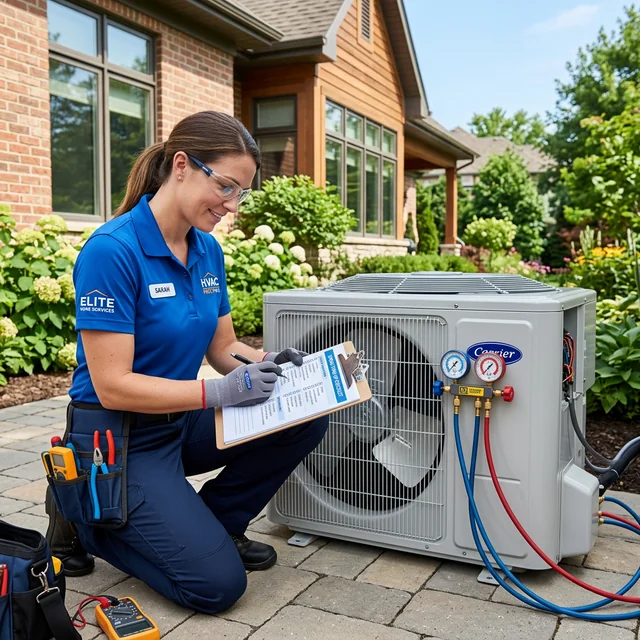
ENERGY STAR recommends annual pre-season check-ups by a contractor: the cooling system in the spring and the heating system in the fall. Before the first heat wave, have an independent HVAC provider perform a full cooling system inspection. This should include checking refrigerant charge, cleaning the evaporator coil, testing electrical components (capacitors, contactors), lubricating moving parts, and measuring the temperature split (the difference between the air entering the return and leaving the supply) against what the equipment should deliver. See the detailed tune-up checklist in the professional tune-up section below.
What HVAC Maintenance Is Needed in Summer?
During peak cooling season, your primary job is to reduce the system's workload and watch for early warning signs of developing problems.
Note Any Damage to Refrigerant Line Insulation (Technician Replaces It)
The copper refrigerant lines running from the outdoor condenser to the indoor air handler are wrapped in foam insulation. From a safe distance — not touching the lines — notice whether the foam where it runs along the exterior wall of the house has cracked, dried, or flaked away. Ultraviolet exposure and weather cause this over time, and exposed refrigerant lines lose cooling capacity. Report any visible damage to the technician at the next tune-up so they can replace the insulation during the visit. Do not attempt to wrap or replace the foam yourself — the lines are pressurized with refrigerant and sit alongside live electrical components at the outdoor cabinet.
Manage Heat Gain to Reduce System Load
Your HVAC system does not just cool air — it must overcome the heat constantly entering through windows, walls, and the roof. Reducing solar heat gain during peak afternoon hours meaningfully reduces the system's duty cycle and extends component life:
- Keep blinds and curtains closed on south- and west-facing windows between 11 AM and 5 PM.
- Use ceiling fans in occupied rooms: moving air makes a room feel cooler, which may let you keep the thermostat a little higher. Fans cool people, not rooms, so switch them off when you leave.
- Avoid using the oven or large appliances during the hottest afternoon hours; these heat sources increase the cooling load.
- If you have an attic, ask your technician or an insulation contractor whether its ventilation and insulation are adequate. A hot attic adds heat to the rooms below and to any ductwork running through it.
Listen and Watch for Warning Signs
During summer, pay attention to how the system sounds and performs:
- Screeching or grinding from the outdoor unit: Bearing failure in the condenser fan motor — address promptly before the motor seizes.
- Warm air from supply vents: Possible refrigerant leak, frozen evaporator coil, or failing compressor.
- Short cycling (turning on and off every few minutes): Could indicate refrigerant issues, an oversized system, a dirty coil, or a failing thermostat.
- Ice forming on refrigerant lines: A frozen coil, which can be caused by low refrigerant or restricted airflow (a dirty filter is one possibility). Turn the system off immediately and call for service; running a frozen system can damage the compressor.
- Unusual spike in electricity bills: Can point to dirty coils, low refrigerant, or a struggling compressor — a technician can tell which.
How Do I Prepare My Furnace for Fall?
Fall is the most critical maintenance season for gas and oil furnace owners. This is when combustion safety and heating system reliability must be confirmed — before cold weather sets in and appointment availability shrinks.
Check Your Carbon Monoxide Alarms
Before heating season, test each carbon monoxide alarm and replace its batteries following the manufacturer's instructions. Check the alarm's age, too: the U.S. Consumer Product Safety Commission notes that the test button "tests whether the circuitry is operating correctly, not the accuracy of the sensor," and that alarms have a recommended replacement age listed in the product literature or available from the manufacturer. CPSC recommends battery-operated or battery-backup CO alarms on every level of the home and outside sleeping areas. For homes with gas or oil furnaces, this is life-safety equipment. For a full guide, see our carbon monoxide safety article.
Have the Humidifier Water Panel Replaced
If your home has a whole-house humidifier attached to the furnace plenum, ask the technician to replace the water panel (evaporator pad) during the fall tune-up. Water panels collect mineral scale from hard water over the previous winter, and a scaled-up panel humidifies poorly. Swapping it means opening the humidifier housing on the furnace, so leave it to the technician rather than doing it yourself.
Schedule a Professional Furnace Tune-Up
Every furnace should receive a professional inspection before each heating season. This is especially important for gas and oil furnaces because the combustion system and heat exchanger must be verified safe before the furnace runs continuously through winter. See the professional tune-up section for what this inspection should include.
Flue and Exhaust Vent Inspection (Technician Job)
Flue and exhaust vent inspection is a technician task, not a homeowner one — a blocked or disconnected flue can let combustion gases, including carbon monoxide, spill into the living space, and a visual "check" by an untrained eye can miss the problems that matter. Book a professional furnace tune-up before heating season; the technician will inspect the full flue run, test for corrosion and blockages, confirm vent caps are intact, and verify PVC joints on high-efficiency units. Do not climb on a roof to inspect terminations yourself. If you notice something obviously wrong from ground level (a visibly collapsed vent, a nest at a termination you can see without a ladder), describe it to the technician when you book the service.
For a complete step-by-step fall walkthrough with specific timing guidance, see our fall HVAC preparation guide.
What HVAC Tasks Are Needed in Winter?
Winter maintenance is primarily about protecting the system from the specific hazards of cold weather — frozen pipes, ice accumulation, and exhaust blockages.
Snow-Blocked Exhaust Vents Are a Carbon Monoxide Risk — Call for Service
Many high-efficiency furnaces vent through plastic (PVC) intake and exhaust pipes instead of a traditional metal flue. These pipes often end low on an exterior wall, where snow drifts or ice can block them. A blocked exhaust or intake can shut the furnace down or interfere with safe combustion. After a heavy snowfall, you can brush loose snow away from around a low, visible vent opening without touching, detaching, or clearing inside the pipe. If the vents are iced over, the pipe looks damaged, or the furnace has stopped running, call an HVAC technician — anything involving climbing, chipping ice, or handling the pipe itself is a technician job because the vent run is tied to combustion safety. If a CO alarm sounds, get everyone outside first and call 911.
Protect Heat Pump Equipment During Ice Storms
Heat pumps include a defrost cycle that periodically reverses refrigerant flow to melt ice that accumulates on the outdoor coil during cold weather — this is normal operation. However, during freezing rain or ice storms, ice accumulation can outpace the defrost cycle. Signs of a problem: the outdoor unit is encased in a solid block of ice (rather than light frost), or the system is running in defrost mode continuously. If this occurs, switch the thermostat to Emergency Heat mode (if your system has backup heat) so the outdoor unit gets time to clear, and call a technician. Never chip at, hose, or otherwise touch a frozen coil — the aluminum fins are fragile.
Manage Drafts and Insulation
Every degree of warm air that escapes through gaps, poor weatherstripping, or uninsulated areas means your furnace must work harder to maintain the set temperature. A brief walkthrough each winter:
- Check weatherstripping on all exterior doors — replace if compressed or cracked
- Inspect window seals for frost condensation, which indicates poor insulation or seal failure
- Check whether the attic hatch or access door is weatherstripped — an unsealed hatch lets warm air escape into the attic
- Ensure the dryer vent damper is closing properly when the dryer is not running — an open damper admits cold outside air continuously
What Does a Professional HVAC Tune-Up Include?
It is easy to book a "tune-up" without knowing what it should include. Knowing what a thorough inspection covers helps you evaluate whether your provider is doing the job properly — and flag if something is being skipped.
| Task | AC Tune-Up | Furnace Tune-Up | DIY or Pro? |
|---|---|---|---|
| Air filter inspection / replacement | ✓ | ✓ | DIY (homeowner supplies filter) |
| Thermostat calibration and testing | ✓ | ✓ | Pro |
| Capacitor voltage test | ✓ | ✓ | Pro (electrical safety) |
| Contactor inspection | ✓ | — | Pro |
| Refrigerant charge check | ✓ | — | Pro (EPA 608 required) |
| Evaporator coil inspection / cleaning | ✓ | — | Pro |
| Condenser coil cleaning | ✓ | — | Pro (outdoor cabinet has high-voltage components) |
| Blower motor inspection and lubrication | ✓ | ✓ | Pro |
| Condensate drain flush | ✓ | ✓ | DIY (vinegar flush only) / Pro (clog removal) |
| Heat exchanger visual and combustion analysis | — | ✓ | Pro (specialized equipment required) |
| Burner inspection and cleaning | — | ✓ | Pro |
| Igniter / flame sensor inspection | — | ✓ | Pro |
| Flue vent inspection | — | ✓ | Pro |
| Electrical connections tightening | ✓ | ✓ | Pro |
| Temperature split / airflow verification | ✓ | ✓ | Pro |
Ask your provider for a written summary of what was tested, what readings were found, and what — if anything — requires attention. A provider who offers no documentation is providing a less thorough inspection.
How Much Does HVAC Maintenance Cost?
The following table puts routine maintenance costs next to the repair and replacement costs a tune-up is meant to help you avoid or plan for. Ranges come from our 2026 cost guide; actual prices vary by region, provider, and equipment.
| Service | Typical Cost | Notes |
|---|---|---|
| Seasonal AC tune-up (one visit) | $80 – $200 | Covers the AC tune-up column above |
| Seasonal furnace tune-up (one visit) | $80 – $200 | Covers combustion analysis, heat exchanger inspection, burner cleaning |
| Annual maintenance contract | $150 – $350/year | Terms vary by provider; ask what visits and discounts are included |
| Air filter (pleated, MERV 8–11) | Varies by size and rating | Check monthly; change at least every 3 months (ENERGY STAR) |
| Drain pan / condensate line repair | $75 – $250 | More if water damage has occurred |
| Capacitor replacement | $150 – $400 | A tune-up can catch a weak capacitor before it fails |
| Contactor replacement | $100 – $300 | Worn contacts can keep the outdoor unit from starting or stopping cleanly |
| Blower motor replacement | $300 – $1,000 | A dirty filter makes the system work harder (ENERGY STAR) |
| Compressor replacement | $1,200 – $3,500 | On an older system, often a repair-vs-replace decision |
| Central AC replacement (3-ton, installed) | $3,200 – $7,000 | AC only; AC + furnace bundle runs $5,800 – $12,000 |
| Gas furnace replacement (80K BTU, installed) | $2,500 – $6,500 | Furnace only |
Connect with a local independent HVAC provider to schedule a maintenance visit.
Call Now — (844) 582-1795Disclosure: We are a referral service and may receive compensation for qualified calls. Calls may be routed to an independent provider network and may be recorded. Pricing and availability vary by provider and location.
When Should I Call an HVAC Professional?
CO alarm sounding: do not look for the source — move everyone outside to fresh air and call 911 or the fire department (CPSC). Gas smell (rotten eggs or sulfur): leave the building right away; do not flip switches, use phones, light flames or start a car, and do not try to find the leak or shut off any gas valve or appliance. Once you are outside at a safe distance, call 911 or your gas utility's emergency line, and do not go back in until they say it is safe (see gas leak vs. CO leak). Call for service today for a burning smell from vents, ice on refrigerant lines or the outdoor unit, a system running constantly without reaching the set temperature in moderate weather, or water actively dripping from the air handler onto a ceiling or floor — turn the thermostat off and do not run the system until a technician has looked at it.
Unusual sounds (grinding, screeching, banging) from the indoor or outdoor unit / system short-cycling (turning on and off every few minutes) / noticeably higher utility bills without a change in usage / reduced airflow from supply vents / your last professional tune-up was more than 12 months ago and heavy-use season is approaching.
System is running normally but approaching its first cooling or heating season without a prior inspection / you purchased or moved into a home and have no maintenance history for the HVAC system / it has been 12+ months since the last tune-up. Schedule proactively in spring (for AC) or fall (for furnace) before peak demand makes appointments scarce.
Frequently Asked Questions
It depends on the filter type, pets, and household conditions. ENERGY STAR advises checking your filter every month, especially during the heavy-use months of winter and summer, changing it if it looks dirty after a month, and changing it at least every 3 months. Follow the replacement interval printed on your filter, and change it sooner if you have pets, allergies, or a lot of dust.
A thorough tune-up typically includes: inspecting and cleaning the blower, testing capacitors and contactors, checking refrigerant charge (for AC), cleaning evaporator and condenser coils, inspecting the heat exchanger for cracks (for furnaces), running a combustion analysis, lubricating moving parts, tightening electrical connections, testing the thermostat, and checking the condensate drain. The technician should provide a written report of what was found and what was done.
Per our cost guide, a seasonal tune-up costs $80 to $200 per visit for a single system, either AC or furnace. Annual maintenance contracts run $150 to $350 per year, and some include priority scheduling and parts discounts. Costs vary by region, company, and what is included in the visit.
Skipping is not recommended. ENERGY STAR recommends annual pre-season check-ups by a contractor. Problems such as a cracked heat exchanger, a slow refrigerant leak, a weakening capacitor, or dirty coils can develop gradually without obvious symptoms, and a tune-up is the chance to catch them early. Per our cost guide, a capacitor replacement runs $150 to $400, while a compressor replacement runs $1,200 to $3,500. Some manufacturer warranties also require proof of regular professional maintenance, so check your warranty terms.
No one can promise a specific lifespan. DOE's federal purchasing guidance assumes an average service life of 18 to 25 years for a residential central air conditioner (18 in hot-humid Southeast states, 25 in hot-dry Southwest states, 24 in northern states), 15 years for an air-source heat pump, and 21 years for a gas furnace. These are life-cycle-cost modelling assumptions, not a promise of how long any one unit will last. ENERGY STAR notes that a dirty filter can increase energy costs and damage your equipment, leading to early failure, so the monthly filter check and annual pre-season tune-ups are the core of a maintenance routine.
A maintenance agreement (also called a service plan or preventive maintenance contract) is a pre-paid or annual subscription for HVAC tune-ups from a specific provider. Many include one or two tune-up visits per year, priority scheduling, and discounts on parts and labor; per our cost guide they run $150 to $350 per year. They can be worth it if you would otherwise postpone maintenance, because the agreement puts the visits on the calendar. Compare what is included against paying $80 to $200 per tune-up visit.
Connect with an independent HVAC provider to schedule a maintenance visit before peak season.
Call Now — (844) 582-1795Disclosure: We are a referral service and may receive compensation for qualified calls. Calls may be routed to an independent provider network and may be recorded. Pricing and availability vary by provider and location.
Local HVAC Service Areas
Cool Call Pro connects homeowners with independent HVAC technicians nationwide. Find a pro in Houston (TX), Chicago (IL), Tampa (FL), or your city. Browse state HVAC guides: Texas, Illinois, and Florida.