
Advertising Disclosure: This site may receive compensation for service connections made through this page. Content is editorially independent.
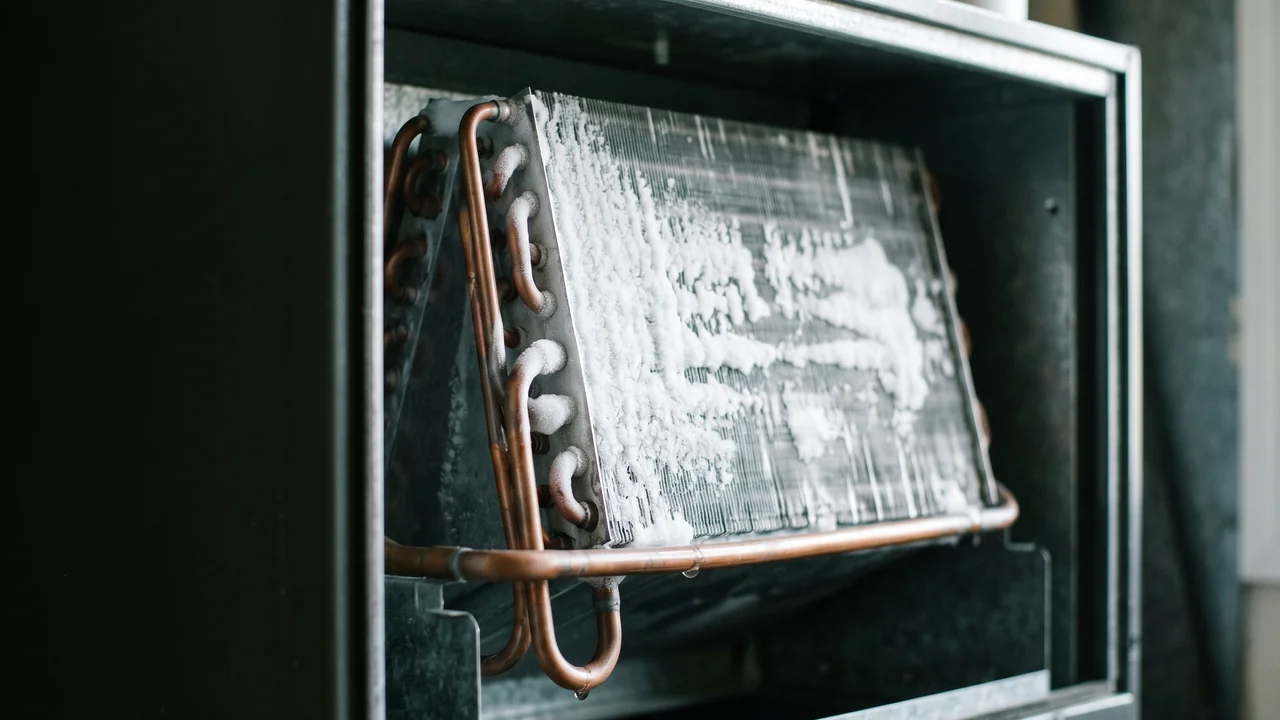
Turn the thermostat to OFF, switch the fan to ON to circulate warm air across the frozen coil, and let the ice melt completely — Carrier puts typical thaw time at 1 to 4 hours, depending on the amount of ice. While you wait, replace the air filter and make sure nothing is blocking the supply registers and return grilles. If the coil freezes again after restart, you likely have a refrigerant leak or an airflow problem such as a failing blower motor — stop running the system and call a technician. Do not chip the ice, do not pour hot water on the coil, and do not run the AC while it is frozen. Replacing a compressor damaged by running against ice costs $1,200 to $3,500 per our cost guide.
Do not open any access panel on the indoor air handler or the outdoor condenser cabinet. HVAC systems run on 240 volts, and capacitors store a dangerous charge even after power is cut. The safest action for a homeowner is to set the thermostat to OFF and call a qualified HVAC technician — the technician will handle the power-down sequence at the service panel and the outdoor disconnect safely. Do not try to flip the breakers yourself, do not operate the outdoor disconnect, and do not open any enclosure to inspect the coil, blower, or capacitor. No diagnosis is worth an injury.
The 30-Second Fix: What to Do Right Now
When you see ice on the copper refrigerant lines near your indoor air handler — or water pooling on the floor from a thawed coil — do these three steps in order:
- Set the thermostat to OFF. Not "higher temperature," not "auto" — completely off. This stops the compressor from pumping refrigerant against a blocked coil.
- Switch the fan setting from AUTO to ON. This keeps the blower running while the compressor is off, pushing warmer indoor air across the frozen coil to thaw it faster and more evenly.
- Wait for the ice to melt. Per Carrier's frozen-AC guide, coils typically take 1 to 4 hours to unfreeze depending on the amount of ice, and heavy ice buildup can take 4 to 8 hours or longer. Place an old towel on the floor under the air handler to catch meltwater, because there can be a lot of it.
Do not touch the ice. Do not apply heat with a hair dryer, heat gun, or hot water — Carrier warns that the rapid temperature change can crack or warp the metal coils, and a cracked refrigerant circuit is a much more expensive repair than waiting. Do not restart the system during thawing. Once the coil is fully thawed and dry, then move to the causes below.
Why Your AC Is Freezing: The 5 Root Causes
A residential evaporator coil freezes when its surface temperature drops below 32°F while humid air still passes over it. The moisture in that air condenses and then freezes. Every root cause of a frozen AC traces back to one of two underlying problems: airflow is too low or refrigerant charge is too low. Here are the five specific failure modes behind those conditions.
1. Clogged Air Filter
A dirty filter restricts the volume of warm indoor air reaching the coil. With less heat to absorb, the coil surface cools below freezing and condensation turns to frost. Trane lists a dirty air filter first among the top causes of a frozen evaporator coil, and it is the cheapest fix in HVAC: a replacement filter. ENERGY STAR advises checking your filter every month, changing it if it looks dirty after a month, and changing it at least every 3 months.
2. Low Refrigerant Charge (Leak)
Refrigerant is not used up in normal operation. As Trane puts it, the only way you would have low refrigerant is a leak or a unit that was improperly charged when it was installed — so on a system that used to cool well, low charge means there is a leak. Low charge drops evaporator pressure, which drops coil surface temperature below freezing even with normal airflow. The leak must be located and repaired, and the system recharged — all of which require a certified technician. EPA rules under Section 608 of the Clean Air Act require technicians who service refrigerant equipment to be certified. A recharge without finding and repairing the leak is a temporary fix: the charge drops again as the leak continues.
3. Dirty Evaporator Coil
Years of dust and biofilm on the indoor coil insulate it from the air passing across it. The surface cools more than it should for the same refrigerant conditions, and ice forms. Coil cleaning is a technician job — the coil sits behind the access panel of the air handler and requires coil cleaner, a fin comb, and in some cases full chemical cleaning with the coil removed. This is not a DIY task.
4. Failed Blower Motor or Blocked Returns
If the blower motor is weak or failing, the air volume across the coil drops and freezing starts for the same reason as a dirty filter. A visual check: confirm you feel strong, steady airflow at multiple supply registers throughout the house. If airflow is weak even with a fresh filter and all registers open, the blower motor or the ductwork has a problem that requires diagnosis.
5. Running the AC Through Cool Nights
If the ice appears only in the morning, look at what the system did overnight. Trane notes that coils frozen only in the morning may point to the thermostat: if it is not telling the AC to shut down as overnight temperatures fall, that is a problem. Expect this pattern more on cool shoulder-season nights and in homes with aggressive night setpoints than during a heat wave.
Another possible cause: a stuck or failing metering device (TXV — thermostatic expansion valve) can also cause freezing by restricting refrigerant flow into the coil. This is a technician diagnosis only.
Get connected with a technician in your ZIP code.
Call Now — (844) 582-1795Disclosure: We are a referral service and may receive compensation for qualified calls. Calls may be routed to an independent provider network and may be recorded. Pricing and availability vary by provider and location.
What You Can Safely Check Yourself
Only the following checks are safe for a homeowner. Every one of them can be done without opening an electrical panel or touching a refrigerant component.
- Replace the air filter. Slide it out of the return grille or the filter cabinet, check the arrow for airflow direction, and insert a new filter of the same nominal size and MERV rating. No tools needed.
- Make sure nothing is blocking the registers and grilles. Walk the house and move furniture, rugs, or stored items away from supply registers and return grilles. Carrier lists blocked vents alongside dirty filters as a cause of restricted airflow.
- Clear debris away from the outdoor condenser. Pull back any grass, leaves, or stored items from around the unit without touching the unit itself. A condenser choked by debris cannot reject heat properly, which puts extra load on the system.
- Flush the condensate drain line with vinegar. The indoor coil produces condensation during normal summer operation. A clogged drain cannot carry it away, water backs up, and in some systems a float switch will shut the system off. Trane suggests asking your technician to show you how to pour a cup of distilled vinegar down the drain line to help prevent clogs — have them point out the access point at your next tune-up. If the drain is already clogged or water is overflowing, set the thermostat to OFF and call a technician.
That is the complete safe DIY list for a frozen AC. Anything beyond this — checking refrigerant pressure, cleaning the indoor coil, testing the blower motor, opening the electrical service panel, working on the outdoor unit beyond clearing debris — is a technician task. Two mistakes to avoid: trying to "help" the system by speeding up thawing, and topping off the refrigerant. Both can turn a small repair into a much larger one.
When to Stop and Call a Technician
Stop DIY and call a professional when any of these conditions are true:
- The coil refreezes within 24 hours of a fresh filter and restart. That points to a refrigerant leak or a blower problem.
- You see ice on the large copper refrigerant line running from the outdoor unit into the house, not just on the indoor coil. Frost on that line can point to low refrigerant charge.
- You hear a hissing sound near the indoor unit or the outdoor unit, or you see oily residue around the indoor unit or on a visible copper line joint. Trane lists both as signs of a possible refrigerant leak that needs a professional right away.
- The system is making water that overflows the drain pan despite a cleared drain line.
- Airflow from every register is weak even after a new filter and open grilles. Likely a blower motor issue.
- The coil keeps freezing after you have thawed it and changed the filter. Carrier says that likely means a mechanical issue or a leak.
For the full walkthrough of every AC failure mode and how they connect, see our complete AC troubleshooting guide. For a related failure — refrigerant leaks that cause ice on the lines — read our guide on why refrigerant leaks make AC ice a growing problem. For a frozen coil that has already thawed and is now causing water damage indoors, see how to stop HVAC water leaks before they ruin drywall and flooring.
What a Technician Will Actually Check
Knowing what a thorough diagnosis looks like helps you tell a careful technician apart from a hurried upsell:
- Refrigerant pressure readings. Gauges on the suction and liquid service ports read high-side and low-side pressure. Abnormal readings point to leak, blockage, or metering device failure.
- Superheat and subcooling measurements. These are the two numbers that actually tell a tech whether the charge is correct, rather than simply "adding refrigerant until it stops freezing."
- Leak detection. UV dye added to the refrigerant, an electronic refrigerant sniffer, or a pressure decay test will isolate the leak site. Any technician who recommends a recharge without leak detection is cutting corners.
- Airflow measurement. Static pressure readings in the ductwork, blower motor amperage draw, and the temperature difference between return air and supply air.
- Evaporator coil inspection. Dust and biofilm buildup on the coil fins, condensate drain pan condition, and aluminum fin bending from prior cleaning attempts.
A technician who skips the pressure readings and jumps straight to "you need a new compressor" or "you need a coil replacement" without showing you the numbers is waving a red flag. Ask to see the gauges and the multimeter readings. If you want to understand common quote inflation patterns before that conversation, read our honest 2026 HVAC cost guide.
What Repairs Cost in 2026
Pricing on this site is anchored to our complete 2026 HVAC Cost Guide, which is the single source of truth for every cost figure — no drift between articles.
- Diagnostic / service call: $65–$150 (some providers credit it toward the repair if you book it with them; ask when you call)
- Refrigerant recharge (R-410A): $150–$600
- Blower motor replacement: $300–$1,000
- Compressor replacement: $1,200–$3,500
- Evaporator coil replacement: $600–$2,000
- Emergency / after-hours surcharge: $100–$300 added
Ranges from our 2026 cost guide. Leak detection and leak repair are quoted separately by the technician. Actual costs vary by region, provider, and system.
Climate Matters: Where AC Freezing Shows Up Most
Hot-humid climates (Tampa, Tallahassee, New Orleans, the Gulf Coast): High humidity means more condensation on the coil in normal operation, so any airflow restriction has more moisture to turn into ice. Trane notes that mold and mildew can form in standing water in the drain pan and clog the drain line, which is where the vinegar flush above helps.
Hot-dry climates (Tucson, Phoenix, Las Vegas): Less moisture reaches the coil, but dust still loads filters, and Trane notes a dirty filter can lead to a dirty evaporator coil and potentially a frozen one. Check the filter monthly and ask your technician to inspect the evaporator coil at the spring tune-up.
Mixed-humid climates (Atlanta, Charlotte, Nashville): Both freeze patterns can show up here: cool-night freezing in the shoulder seasons (cause 5 above) and airflow or refrigerant problems under peak summer load. Browse local service providers in Florida, Arizona, or explore all service areas.
Sources and Further Reading
Further reading from the federal and manufacturer sources cited above:
- U.S. Department of Energy — Purchasing Energy-Efficient Central Air Conditioners
- EPA Section 608 Refrigerant Handling Regulations
- ENERGY STAR — Maintenance Checklist
- Carrier — Will a Frozen AC Fix Itself?
- Trane — Top 5 Causes of Frozen AC Coils
Don't wait — get a technician dispatched to your area.
Call Now — (844) 582-1795Disclosure: We are a referral service and may receive compensation for qualified calls. Calls may be routed to an independent provider network and may be recorded. Pricing and availability vary by provider and location.
Frequently Asked Questions
The evaporator coil freezes when its surface temperature drops below 32°F while humid indoor air still flows across it. Carrier describes two main reasons: warm air is not reaching the coil (restricted airflow from a dirty filter, blocked vents, a dirty coil, or a failing blower) or the pressure inside the coil is too low (low refrigerant from a leak). Other possible causes include a stuck metering device (TXV) or the AC running through cool nights when it should have shut off.
Carrier says coils typically take 1 to 4 hours to unfreeze, depending on the amount of ice, with cooling set to OFF and the fan set to ON; heavy ice buildup can take 4 to 8 hours or longer. Do not try to speed up thawing with a hair dryer, hot water, or a heat gun. Carrier warns that the rapid temperature change can crack or warp the metal coils.
No. Do not pour hot water on a frozen coil: Carrier warns that the rapid temperature change can cause the metal coils to crack or warp. A cracked refrigerant line is a much more expensive repair than waiting out the thaw. Stick to the safe method: thermostat OFF, fan switch ON, let the ice melt on its own, and place a towel on the floor under the air handler to catch meltwater.
Trane warns that running the system with a frozen coil is harmful to the compressor in the outdoor unit, and the compressor is a very expensive component to replace: $1,200 to $3,500 installed, per our cost guide. A frozen coil is a warning sign, not a symptom to push through. Shut the system off immediately.
No. Carrier lists restricted airflow from a dirty air filter or blocked vents as a common cause of a frozen coil, not only low refrigerant. Replace the filter, let the system thaw fully, and restart. If the coil freezes again, Carrier says you likely have a mechanical issue or a leak, and a technician will need to find and repair it. EPA Section 608 rules require technicians who service refrigerant equipment to be certified — refrigerant recharge is never a homeowner task.
If the cause is a dirty filter, the fix is a replacement filter and no service call. If a technician is needed, our cost guide lists a diagnostic fee of $65 to $150, a refrigerant recharge at $150 to $600 (plus the cost of finding and repairing the leak), blower motor replacement at $300 to $1,000, and evaporator coil replacement at $600 to $2,000. See our full HVAC Cost Guide for the complete 2026 pricing breakdown.
Local HVAC Service Areas
Cool Call Pro connects homeowners with independent HVAC technicians nationwide. Find a pro in Tallahassee (FL), Tampa (FL), Tucson (AZ), or Atlanta (GA), or browse by state: Florida, Arizona, or all locations.