
Advertising Disclosure: This site may receive compensation for service connections made through this page. Content is editorially independent.
Before opening any panel, a technician will kill the breaker at the disconnect to de-energize the system before working on the refrigerant circuit — this is not a homeowner step. Refrigerant work is federally regulated under EPA Section 608; certification is legally required to recover, recharge, or repair sealed refrigerant lines.
Ice on your AC can signal a refrigerant leak (a dirty filter or blocked airflow can also cause it). You cannot legally recharge refrigerant yourself (EPA Section 608), and “topping off” a leaking system wastes money — the leak must be found and repaired first. R-22 (Freon) is phased out and runs $90–$150 per pound on our cost guide; R-410A is still used and serviced but is being phased down in favor of lower-GWP refrigerants such as R-454B and R-32. Leak repair costs vary by leak location and severity.
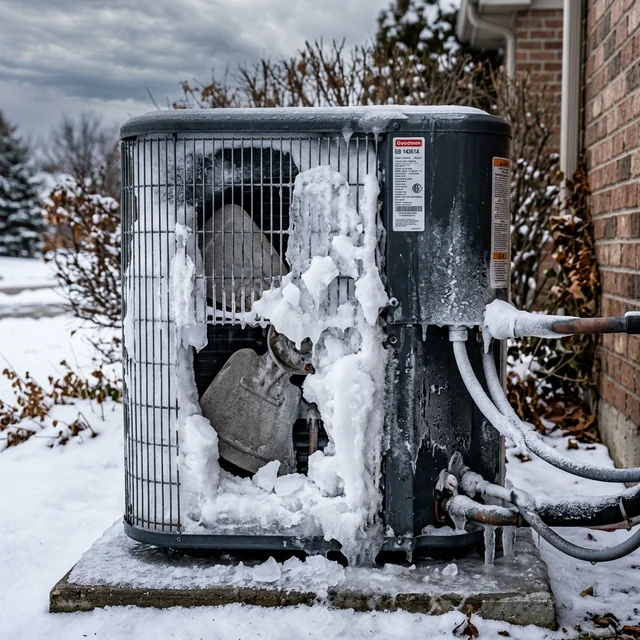
It's 100 degrees outside, your air conditioner is running constantly, but your home feels like an oven. You go outside to check the AC unit and find it covered in ice. It might seem strange for an AC to freeze in the heat of summer, but it can be a sign of a serious and expensive problem: a refrigerant leak. Left unaddressed, a leak doesn't just mean an uncomfortable house — it can destroy the compressor, the costliest AC repair on our cost guide ($1,200–$3,500), and turn a few-hundred-dollar repair into a multi-thousand-dollar replacement.
Ice is not always a leak. A dirty air filter restricts airflow over the evaporator coil and can let it freeze too (ACCA); our guide to an AC freezing up in summer covers those airflow causes. This article focuses on refrigerant leaks: what they cost, why a recharge alone does not fix them, and when a leak tips the decision toward replacement. For every other reason an AC stops cooling, start with our complete AC troubleshooting guide.
What is AC Refrigerant?
Refrigerant (often referred to generically by the brand name Freon™) is the chemical fluid that courses through your air conditioning system. It changes state from a liquid to a gas and back again in a continuous cycle, absorbing heat from inside your home and releasing it outside. This process — called the vapor-compression refrigeration cycle — is the fundamental principle behind every residential air conditioner, heat pump, and refrigerator.
Here is the simplified version of how the cycle works:
- Evaporator coil (indoors): Refrigerant arrives as a cold, low-pressure liquid. Warm air from your home blows across the coil. The refrigerant absorbs that heat and evaporates into a gas, cooling the air that is then circulated back into your living space.
- Compressor (outdoor unit): The low-pressure gas is compressed into a hot, high-pressure gas. This is the most mechanically demanding step — and the one that is most sensitive to refrigerant level.
- Condenser coil (outdoor unit): The hot gas releases its heat to the outside air and condenses back into a liquid.
- Expansion valve: The high-pressure liquid is forced through a small restriction, dropping its pressure and temperature rapidly before it re-enters the evaporator coil.
Unlike gas in a car, an air conditioner does not "consume" or "burn" refrigerant. It runs in a completely closed loop. This means if your system is low on refrigerant, there is a leak somewhere in the lines. You cannot simply "top it off" without fixing the underlying hole, or the new refrigerant will just escape again — taking money with it.
What's the Difference Between R-22, R-410A, and R-454B?
The type of refrigerant your system uses has a dramatic impact on how much a leak will cost to fix. Check the yellow EnergyGuide sticker or the data plate on your outdoor condenser unit to identify your refrigerant type.
| Refrigerant | Equipment Made | Status | Cost Per Pound (our cost guide) |
|---|---|---|---|
| R-22 (Freon) | Before 2010 | EPA ended production & import in 2020 — existing stocks only | $90–$150 |
| R-410A (Puron) | ~2010–2025 | Being phased down under the AIM Act; still used to service existing systems | $20–$50 |
| R-454B (Puron Advance) | 2025 and newer | One of the lower-GWP refrigerants used in newly manufactured equipment (R-32 is another) | Not on our cost guide; ask for an itemized quote |
R-22 systems deserve special attention. EPA's HCFC phaseout ended production and import of HCFC-22 (R-22) in 2020 (EPA HCFC phaseout schedule), so any R-22 used for service today comes from existing stocks rather than new production. Our cost guide lists R-22 at $90–$150 per pound, against $20–$50 for R-410A. If your older R-22 system has sprung a significant leak, that price gap is a strong reason to get a replacement quote alongside the repair quote rather than paying to recharge a system that may leak again.
R-410A is not immune to the phasedown either. Under the American Innovation and Manufacturing (AIM) Act, EPA is phasing down production and import of HFC refrigerants such as R-410A. New residential HVAC equipment manufactured on or after January 1, 2025 must use a refrigerant with a lower global warming potential (GWP), such as R-454B. R-410A systems manufactured or imported before that date can still be installed: EPA's May 2026 final rule removed the earlier January 1, 2026 installation cutoff and allows that inventory to be installed until it runs out (EPA fact sheet, May 2026). If your R-410A system is aging, a major leak may be the tipping point that makes replacement worth serious consideration.
How Does the R-410A Phase-Down Affect My Repair Costs?
If your AC system was installed between roughly 2010 and 2024, it probably uses R-410A (sold under brand names like Puron); the data plate on the outdoor unit will confirm it. Unlike the R-22 it replaced, R-410A does not deplete the ozone layer, but it has a high global warming potential. That is why EPA is phasing it down, and why it pays to understand what a recharge costs before you approve one.
Why R-410A Is Being Phased Down
The American Innovation and Manufacturing (AIM) Act, signed in 2020, directed the EPA to phase down production and import of high-GWP (global warming potential) refrigerants in the United States. R-410A has a GWP of 2,088 (EPA GWP reference table) — meaning one pound released to the atmosphere has the same climate impact as 2,088 pounds of CO₂. Under the AIM Act, EPA's HFC phasedown began with a 10% reduction in 2022, dropped to 60% of baseline in 2024, and reaches 15% of baseline by 2036 (EPA HFC phasedown FAQ).
The AIM Act imposed a two-step transition for residential HVAC: equipment manufactured on or after January 1, 2025 must use refrigerants with a GWP below 700 (R-410A does not qualify), and the original rule also set a January 1, 2026 installation cutoff. EPA's May 2026 final rule removed that cutoff, so R-410A systems manufactured or imported before January 1, 2025 may still be installed until that inventory runs out. Newly manufactured systems use lower-GWP refrigerants such as R-454B (GWP of 465) or R-32 (GWP of 675), per EPA's GWP reference table. Existing R-410A systems can still be serviced — the refrigerant is not banned for use in equipment that already contains it — but new supply is limited by EPA's production and import caps, which step down on a schedule through 2036.
How This Affects R-410A Repair Costs
As EPA's caps shrink the amount of new HFC refrigerant that can enter the market, existing R-410A systems still have to be serviced from that smaller supply. What you pay per pound depends on your provider and region. Our cost guide lists R-410A at $20–$50 per pound, R-22 at $90–$150 per pound, and a typical R-410A recharge at $150–$600 for parts and labor, before the cost of finding and repairing the leak itself.
Equipment is designed and rated for one specific refrigerant, which is listed on the unit's data plate, so you cannot simply switch refrigerant types in an existing system. EPA notes that homeowners can keep repairing an R-410A system, including replacing a faulty component with a similar R-410A component (EPA). Moving to R-454B or R-32 means replacing the system with equipment built for that refrigerant. This is not a DIY crossgrade — it is a full system replacement.
What This Means If Your R-410A System Needs a Recharge
If a technician tells you your R-410A system has a significant leak and needs a recharge, use the following framework to decide what to do:
- System is under 10 years old: Price the leak repair and recharge first. DOE's federal purchasing guidance assumes an average service life of 18 to 25 years for a residential central air conditioner (DOE FEMP); that is a life-cycle-cost modelling assumption, not a promise, but it means a younger system usually has plenty of modelled life left.
- System is more than 10 years old: ENERGY STAR suggests it may be time to call a contractor about replacement once an air conditioner or heat pump is more than 10 years old. Get a repair estimate and a replacement quote side by side. A common rule of thumb (not an industry standard) is to get a replacement quote whenever a repair would cost more than half the price of a comparable new system.
When getting a repair quote, ask the technician to itemize the refrigerant charge separately from labor and parts. Know how many pounds the system needs (your system's charge capacity is on the data plate) and what the per-pound rate is. This lets you compare quotes accurately and makes it easier to do the math on repair vs. replace.
Suspect a refrigerant leak in your system? Refrigerant work is federally regulated — only a Section 608-certified technician can legally buy refrigerant for your system and do the refrigerant work. Get connected with one 24/7: (844) 582-1795.
What Are the Signs of a Refrigerant Leak?
Refrigerant leaks range from a slow, pinhole seep that takes months to deplete the charge, to a sudden rupture from a cracked line or damaged coil that renders the system useless within hours. The symptoms vary in severity, but these are the signs to watch for:
- Ice on the Evaporator Coils or Refrigerant Lines: Without enough refrigerant to absorb heat properly, the pressure inside the evaporator coil drops too low. The coil surface falls below 32°F, and the humidity in your indoor air freezes directly onto the pipes. A small frost patch can progress to a solid block of ice encasing the entire air handler if the system continues running.
- Warm Air Blowing from Vents: The blower fan is circulating air, but the refrigerant can no longer absorb enough heat to meaningfully cool it. Rooms that used to reach the set temperature now never quite get there, even with the system running all day.
- Hissing or Bubbling Sounds: A pressurized refrigerant leak often produces a faint hiss (gas escaping) or gurgle (liquid and gas mixing at the leak point). These sounds are most audible near the indoor air handler or along exposed refrigerant lines in the attic or utility closet.
- Spiking Energy Bills: Because the system cannot satisfy the thermostat, it runs for hours trying to reach the set temperature. This extended run-time burns significantly more electricity without delivering more cooling. A sudden, unexplained jump in your utility bill during cooling season is worth investigating.
- Higher-Than-Normal Humidity Indoors: A functioning AC system dehumidifies the air as a byproduct of cooling it. A refrigerant-starved system does less of both — leaving your home feeling clammy even when the thermostat says it is at the right temperature.
- An Unusual Chemical Odor: If you detect an unusual chemical odor near the indoor unit, ventilate the area and contact a professional promptly. Do not attempt to investigate a suspected refrigerant leak in an enclosed space.
EPA lists the risks of refrigerants as including toxicity, flammability, asphyxiation, and physical hazards (EPA refrigerant safety); a large release in a small, enclosed space is the situation to avoid. Additionally, Section 608 of the Clean Air Act prohibits intentionally venting refrigerant while maintaining, servicing, repairing, or disposing of air conditioning equipment (EPA). Never attempt to capture, vent, or patch a refrigerant leak yourself.
How Much Does a Refrigerant Leak Repair Cost?
Refrigerant leak repairs vary considerably based on where the leak is located, the type of refrigerant the system uses, and how much refrigerant has escaped. The figures below come from our cost guide; actual pricing depends on your provider, region, and the specific condition of your equipment.
| Service | Typical Cost Range | Notes |
|---|---|---|
| Leak detection / diagnosis | $65–$150 | Diagnostic / service-call fee; ask whether the leak search (electronic detector or UV dye) is included |
| Minor leak repair (copper line braze) | Quote-based | Not on our cost guide; depends on where the leak is. Ask for an itemized quote |
| Evaporator coil replacement | $600–$2,000 | Required when coil itself has corroded or cracked |
| R-22 refrigerant (per pound) | $90–$150 | Varies with the remaining supply |
| R-410A refrigerant (per pound) | $20–$50 | Pounds needed depend on the leak and the system; the full charge is on the data plate |
| R-410A recharge (parts and labor) | $150–$600 | Before the cost of repairing the leak itself |
| Compressor replacement (if damaged) | $1,200–$3,500 | Result of running low on refrigerant for an extended period |
The most important cost variable is whether the compressor has been damaged. The compressor relies on the refrigerant itself for lubrication and cooling. Running an AC system with a severe refrigerant shortage can cause the compressor to overheat and seize. Compressor replacement runs $1,200 to $3,500 on our cost guide, against $3,200 to $7,000 for a new 3-ton central AC, so a failed compressor is a strong reason to price replacement as well.
This is why turning the system off the moment you suspect a leak is the single most important step you can take to limit your total repair cost.
Is Topping Off Refrigerant a Good Idea?
It is tempting to ask an HVAC technician to just "add a little Freon" to get through the summer. While this might provide temporary cool air, it is a poor financial strategy for several reasons.
First, refrigerant leaks do not fix themselves; as long as the leak is there, new refrigerant keeps escaping. Paying hundreds of dollars for new refrigerant only to have it escape into the atmosphere over the next few months is money that solves nothing.
Second, Section 608 of the Clean Air Act prohibits intentionally venting refrigerant while servicing equipment (EPA). A reputable HVAC professional will recommend finding and fixing the leak before recharging the system, because refrigerant added to an unrepaired leak simply escapes again.
Third, the underlying cause matters. Some coil corrosion, such as formicary corrosion (a form of pitting in copper tubing), can leave several pinhole leaks across an evaporator coil. When that happens, patching individual pinholes may not be practical, and a technician may recommend replacing the coil instead.
What Should I Do If My AC Freezes or Leaks?
Acting quickly and in the right order can save you from a compressor replacement bill. Follow these steps:
Step 1: Turn off the AC immediately. Go to your thermostat and set it strictly to "OFF" — not "Fan Only" and not a higher temperature. Running an air conditioner with a refrigerant leak forces the compressor to operate without its required lubrication and internal cooling. The compressor can overheat and fail, turning a moderate repair into a compressor replacement ($1,200–$3,500 on our cost guide) or a full system replacement.
Step 2: Switch the fan to "ON." While the AC cooling function is off, set the thermostat's fan setting from "Auto" to "ON." This forces the blower fan to run continuously, pulling warm indoor air across the frozen evaporator coil to melt the ice. This is important: a technician cannot properly inspect or repair a frozen system. They must wait for the ice to thaw completely, which can take hours depending on how severe the ice buildup is.
Step 3: Place towels around the indoor unit. As the ice melts, it will drain through the condensate pan and drain line. If the drain is partially blocked, the meltwater can overflow and damage your ceiling, walls, or flooring. Place towels or a shallow pan beneath the air handler while it thaws.
Step 4: Connect with a professional. Refrigerant handling is strictly regulated under EPA Section 608. Only a technician with an EPA-approved certification may legally purchase, handle, recover, and recharge HVAC refrigerant. They will use specialized electronic leak detectors or UV dye to pinpoint the exact location of the leak in your copper lines or coil before brazing or replacing the affected component.
Should I Repair or Replace My AC After a Refrigerant Leak?
Not every refrigerant leak warrants a repair. In some situations, replacement is the more cost-effective decision. Here is a practical framework for thinking it through:
- Age of the system: ENERGY STAR suggests having a contractor evaluate an air conditioner once it is more than 10 years old. If your system is past that point and needs a major refrigerant repair, the remaining service life may not justify the investment — particularly given SEER2 efficiency improvements in newer equipment.
- The "$5,000 rule": A common rule of thumb (not an industry standard) is to multiply the system's age in years by the repair quote. If the result is more than $5,000, get a replacement quote before approving the repair. For example: a 12-year-old system with a $450 repair = $5,400, just over the line.
- Refrigerant type: R-22 systems are a strong candidate for replacement any time a major leak occurs. At $90–$150 per pound for R-22 on our cost guide, a recharge after a major leak can cost far more than the same work on an R-410A system — money that could go toward a new, more efficient unit.
- Compressor condition: If the compressor has already been damaged by running low on refrigerant, compare the compressor quote ($1,200–$3,500 on our cost guide) with a replacement quote ($3,200–$7,000 for a 3-ton central AC). A compressor is the "heart" of the AC — when it fails on an older system, replacing the entire unit is worth pricing.
- Pattern of repairs: A single refrigerant leak on a well-maintained system is not inherently a red flag. But if the system has needed refrigerant added more than once, the leak was never fixed, and another recharge will not solve it.
An independent provider can assess your system's current refrigerant pressure, compressor health, and overall condition and give you a realistic picture of whether repair or replacement makes more sense for your situation.
Independent providers may be available to assess your system in your area.
Call Now — (844) 582-1795Disclosure: We are a referral service and may receive compensation for qualified calls. Calls may be routed to an independent provider network and may be recorded. Pricing and availability vary by provider and location.
Frequently Asked Questions
No. Under EPA's refrigerant sales restriction, only Section 608-certified technicians can buy refrigerant for stationary HVAC systems (EPA), and Section 608 prohibits venting refrigerant during service. Beyond the legal issue, adding refrigerant without locating and fixing the leak is only a temporary measure — the refrigerant will escape again, and the underlying damage will worsen.
The total time depends on where the leak is and whether the system is frozen. If the evaporator coil is iced over, the technician must wait for a full thaw before inspection, which can take hours. Once the coil is accessible, the technician locates the leak with electronic detection equipment or UV dye, repairs it (brazing a copper line, for example, or replacing a coil), then pressure-tests and recharges the system. Ask the technician for a time estimate once the leak is found.
R-22 (Freon) was the standard refrigerant for residential equipment made before 2010. The EPA phased it out due to its ozone-depleting properties; production and import ended in 2020, making remaining supply scarce and expensive — $90 to $150 per pound on our cost guide. R-410A (Puron) replaced R-22 and is used in systems built between roughly 2010 and 2025. It does not deplete the ozone layer but has a high global warming potential, so it is now being phased down under the AIM Act in favor of lower-GWP refrigerants like R-454B used in new equipment.
Several symptoms overlap with other AC issues, so professional diagnosis is important. That said, refrigerant problems tend to produce a specific combination: the system runs continuously but cannot reach the set temperature, the indoor air handler or refrigerant lines develop frost or ice, and you may notice a faint hissing sound near the unit. A clogged air filter or dirty condenser can cause similar symptoms without a leak. Technicians confirm low refrigerant charge using manifold gauge sets to read system pressures directly.
Standard homeowner's insurance policies typically do not cover refrigerant leak repairs because they are considered maintenance or wear-and-tear issues rather than sudden, accidental damage. Some home warranty plans do cover refrigerant-related repairs, though coverage varies widely by plan and provider. Review your home warranty documents before scheduling service, as some plans require use of their approved provider network.
A properly functioning, leak-free AC system should never need refrigerant added. The refrigerant operates in a completely closed loop and is not consumed over time — it circulates indefinitely. If a technician tells you your system needs refrigerant "topped off" every season as routine maintenance, that is a clear indicator of an ongoing leak that needs to be diagnosed and repaired, not repeatedly refilled.
📚 Trusted Industry Sources
Local HVAC Service Areas
Cool Call Pro connects homeowners with independent HVAC technicians nationwide. Find a pro in Phoenix (AZ), Las Vegas (NV), Dallas (TX), or your city. Browse state HVAC guides: Arizona, Nevada, and Texas.