
Advertising Disclosure: This site may receive compensation for service connections made through this page. Content is editorially independent.
A heat pump replaces both your AC and furnace with one system and eliminates indoor combustion; whether it is cheaper to run than gas depends on your local electricity and gas prices. Cost per our cost guide: $7,600–$9,500 for a standard-efficiency ducted system (2–3 tons), $1,800–$5,000 for a one-zone ductless mini-split, and more for cold-climate and high-efficiency models. Federal Section 25C tax credit ended Dec 31, 2025 (OBBBA) — state HEEHR rebates (not for replacing gas equipment) and utility rebates may apply. ENERGY STAR Cold Climate heat pumps must keep at least 70% of their 47°F heating capacity at 5°F. The honest decision depends on your local electricity-to-gas rate ratio, climate zone, and whether you're replacing a dying AC + furnace at the same time. This is general guidance, not tax advice — consult a qualified tax professional for your specific situation.
If you're reading this, you're considering one of the largest home-equipment decisions you'll make this decade — a system that handles both heating and cooling for years (DOE's federal purchasing guidance assumes a 15-year average life for an air-source heat pump). The 2026 reality is more nuanced than either side of the heat-pump debate admits: cold-climate models have improved, but the federal Section 25C tax credit expired for systems placed in service after December 31, 2025. This guide covers cost, climate fit, rebates after the One Big Beautiful Bill Act (OBBBA), and eight questions to ask any installer.
Installed-cost ranges throughout come from our 2026 HVAC Cost Guide. If you're weighing the broader heat-pump-vs-gas-furnace decision, see our heat pump vs. gas furnace comparison.
What Is a Heat Pump? (And Why It Matters in 2026)
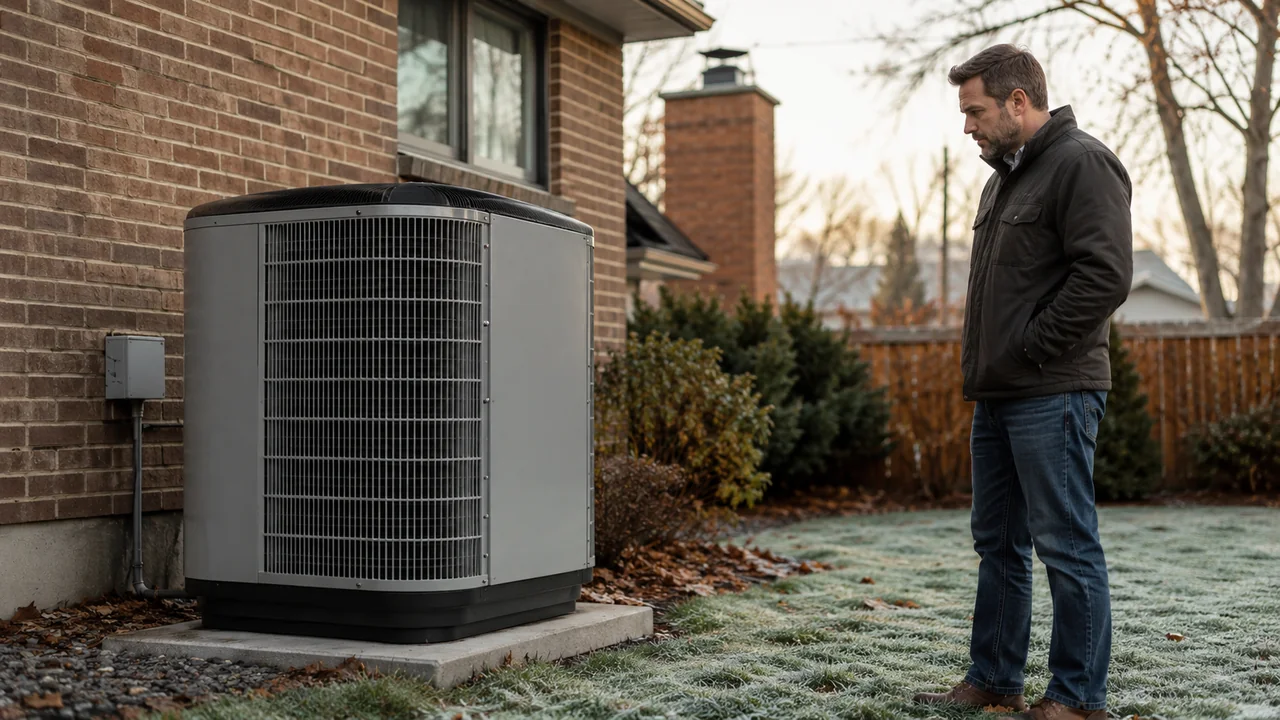
A heat pump is an electric HVAC system that moves heat between indoors and outdoors using a refrigerant cycle — the same physics as a refrigerator or air conditioner, but reversible. In summer, it pulls heat out of your home and dumps it outside (cooling). In winter, it pulls heat from outside air and pumps it inside (heating). One machine, two seasons, no combustion.
Heat pumps don't create heat by burning fuel — they move it, which takes far less energy. ENERGY STAR notes that an air-source heat pump can deliver up to three times more heat energy to a home than the electrical energy it consumes. A gas furnace's AFUE is always below 100%, because it cannot deliver more heat than the fuel contains.
Three things changed between 2020 and 2026 that made heat pumps mainstream:
- Cold-climate models arrived. DOE notes that traditional heat pumps can suffer performance decline in colder climates, while cold-climate heat pumps operate with greater capacity and efficiency below 32°F. ENERGY STAR's Cold Climate designation requires at least 70% of 47°F heating capacity at 5°F.
- Refrigerant transition. Under the AIM Act, residential AC and heat pump systems must now use refrigerants under EPA's GWP limit of 700 (such as R-32); higher-GWP R-410A equipment manufactured or imported before Jan 1, 2025 may still be installed under EPA's May 2026 final rule.
- Incentive landscape. The IRA expanded Section 25C to $2,000/year for heat pumps in 2023-2025. OBBBA terminated that credit for 2026 installations (Public Law 119-21, signed July 4, 2025). State HEEHR (electric-to-electric upgrades only) and utility rebates remain.
The 2026 Cost Reality: Equipment, Installation, Operating
Before you compare options, anchor on what each system costs, per our cost guide:
- Standard-efficiency ducted heat pump (2–3 tons): $7,600–$9,500 installed. Best for homes with existing ductwork.
- Cold-climate or high-efficiency ducted heat pump: higher. The NREL/LBNL study behind our ducted range put its high-efficiency cold-climate scenario at an average of about $22,400 for ducted equipment (2022 dollars).
- Ductless mini-split (1 zone): $1,800–$5,000 installed. Best for additions, garages, and homes without ducts.
- Complex retrofit or duct modifications: add $500–$2,000 or more.
Ranges from our cost guide; the ducted range is derived from the NREL/LBNL installed-cost model in 2022 dollars. Actual quotes vary by region, system size, electrical capacity, and provider. Ask whether a Manual J load calculation is included.
Operating cost depends on your local electricity-to-gas rate ratio. At 2025 U.S. average residential prices (17.30¢/kWh and $15.34 per thousand cubic feet of gas, about $1.48/therm, per EIA), a heat pump has to average a COP of about 3.3 to match a 95% AFUE gas furnace, or about 2.7 to match an 80% AFUE furnace. Your own rates can move that break-even a lot in either direction. Full math: heat pump vs gas furnace.
The 6 Decision Factors That Determine If a Heat Pump Fits Your Home
Six questions. Skip any one and you're guessing.
1. What's your climate zone?
The colder your winters, the more it matters that the unit is a certified cold-climate model or paired with backup heat; ENERGY STAR recommends a backup energy source for the lowest temperatures. The IECC climate zone map shows where you sit.
2. What's your electricity-to-gas rate ratio?
Cost per million BTU of heat: heat pump = electricity price per kWh ÷ (COP × 0.003412); gas furnace = gas price per therm × 10 ÷ AFUE (as a decimal). Plug in the rates from your own utility bills and the seasonal COP your installer expects in your climate; whichever number is lower is cheaper to run.
3. Are you replacing AC AND furnace at the same time?
One heat pump replaces both. ENERGY STAR suggests talking to a contractor about replacement when a heat pump or AC is more than 10 years old or a furnace is more than 15 years old. If both are near that point, compare one heat pump ($7,600–$9,500 standard-efficiency ducted) with an AC + furnace bundle ($5,800–$12,000) on our cost guide. If only one is dying, see our repair-or-replace framework.
4. Is your electrical service adequate?
Older homes with smaller electrical service may need a panel or service upgrade, especially if the design relies on electric resistance backup heat. Ask the installer to check electrical capacity before quoting, and get any upgrade priced separately.
5. Do you have ductwork?
Existing ducts: ducted heat pump replaces the furnace and reuses ducts. No ducts (or undersized/damaged): ductless mini-split is usually simpler and cheaper than installing new ducts.
6. How long are you staying?
Simple payback = the extra installed cost ÷ the annual operating savings from factor 2. If you expect to sell before the payback point, you won't capture the savings. Ask yourself this before any installer does.
Get connected with a technician in your ZIP code for a Manual J load calculation and itemized quote.
Call Now — (844) 582-1795Disclosure: We are a referral service and may receive compensation for qualified calls. Calls may be routed to an independent provider network and may be recorded. Pricing and availability vary by provider and location.
Heat Pump Types Compared: Ducted, Ductless, Geothermal, Cold-Climate
"Heat pump" is a category, not a single product. Four major types:
Ducted (Standard Air-Source) Heat Pump
One outdoor unit + indoor air handler, connected to existing ductwork. $7,600–$9,500 installed for a standard-efficiency 2–3 ton system (per our cost guide). Best for: homes with existing ducts in good condition.
Cold-Climate Heat Pump (Air-Source, Enhanced)
Designed to keep heating efficiently in cold weather; ENERGY STAR's Cold Climate designation requires at least 70% of 47°F heating capacity at 5°F and a COP of at least 1.75 at 5°F. Costs more than a standard-efficiency system (see the cost section above). Best for: cold-winter climates. Check the model number against ENERGY STAR's certified list.
Ductless Mini-Split Heat Pump
One outdoor unit + one or more wall/ceiling-mounted indoor heads. No ductwork required. $1,800–$5,000 installed for one zone; multi-zone systems cost more. Best for: no-duct homes, additions, garages, zoned setpoints. Skips duct losses: ENERGY STAR estimates that in a typical house about 20 to 30 percent of the air moving through ducts is lost to leaks, holes, and poor connections.
Geothermal (Ground-Source) Heat Pump
Uses the earth's stable underground temperature instead of outdoor air. Our cost guide has no geothermal range; the buried ground loop makes it the most expensive option to install, and it needs lot space for the loop. Best for: long-term homeowners with the space. Get a site-specific quote.
2026 Incentives: HEEHR, Utility Rebates, and OBBBA's Impact
The federal Section 25C credit is gone for 2026 installations. The One Big Beautiful Bill Act (Public Law 119-21, signed July 4, 2025) terminated 25C for property placed in service after December 31, 2025, per the IRS Section 25C page. The companion Section 25D credit ended the same date. If installed by Dec 31, 2025, you may still claim 25C on your 2025 return (Form 5695, up to 30% of cost capped at $2,000 for heat pumps).
What's still available in 2026:
- State High-Efficiency Electric Home Rebate (HEEHR) program — IRA-funded and run through state energy offices. Under 42 U.S.C. 18795a, a rebate can cover up to 100% of project cost for households under 80% of Area Median Income and up to 50% at 80–150% AMI, capped at $8,000 for a heat pump and $14,000 in total rebates per household. DOE says the rebates are available in select states — check your state energy office. Important if you heat with gas, oil, or propane: DOE Program Notice 26-2 (effective May 29, 2026) removed rebates for fuel switching. HEEHR now covers only upgrades from existing electric equipment (such as electric resistance heat or an older heat pump) to more efficient electric equipment, plus new construction. Rules vary by state.
- Utility rebates — some electric utilities offer rebates on high-efficiency heat pumps; amounts and rules vary by utility. The DSIRE database is the national clearinghouse.
- State programs — some states run their own heat pump incentives; DSIRE and your state energy office list what is open.
Honest framing: do the math without counting on federal credits in 2026; treat any state/utility rebate as a bonus. Be wary of any quote that counts a 2026 federal tax credit, or a HEEHR rebate you haven't confirmed you qualify for. General guidance, not tax advice; consult a qualified tax professional and your state energy office.
Cold-Climate Performance: Do Heat Pumps Really Work Below Freezing?
Yes, with the right model: a heat pump that earns ENERGY STAR's Cold Climate designation must keep at least 70% of its 47°F heating capacity at 5°F, with a COP of at least 1.75 at that temperature. ENERGY STAR says these units keep working below 5°F, but pairing them with a backup energy source heats the home most efficiently at even lower temperatures.
"Cold-climate" in a quote should mean the exact model is ENERGY STAR Cold Climate certified; check the model number against ENERGY STAR's certified list. Expect to pay more than for a standard-efficiency system (see the cost section).
In the coldest weather, backup heat takes over part of the load: either electric resistance heat (which turns each kWh into one kWh of heat, so it is expensive for extended cold) or, in a dual-fuel setup, a gas furnace. For the physics of why capacity drops as it gets colder, see heat pumps in cold weather: the physics.
Climate Sweet Spots: Where Heat Pumps Win Hardest
The math shifts with your winter temperatures and local utility rates. These are general patterns; run factor 2 with your own bills.
- Pacific Northwest (Eugene, Portland, Seattle): clearest wins. Mild winters mean fewer hours in the cold conditions where heat pumps lose efficiency. 2025 residential electricity averaged 15.37¢/kWh in Oregon and 13.11¢/kWh in Washington (EIA, preliminary).
- Mid-Atlantic / Southeast (Winston-Salem, Charlotte, Atlanta, Nashville): mixed-humid climates where a heat pump can often handle both seasons and replace AC + furnace.
- South-Central (Oklahoma City, Dallas, Memphis): heat pumps work well, but very cheap regional gas can keep furnace economics competitive. Run the rate math.
- Mountain West (Cheyenne, Denver, Salt Lake City): cold-climate model or dual-fuel territory. Subzero nights stress standard units.
- Northeast / Upper Midwest: for a full conversion, look for ENERGY STAR Cold Climate models with backup heat; check DSIRE for state incentives.
- Hot-dry (Phoenix, Las Vegas, Tucson): heat pumps work fine but heating use is minimal — limited advantage unless the furnace is also dying.
Browse local providers in NC, OR, or any of our 115 service areas.
Before You Sign: 8 Questions to Ask Every Heat Pump Quote
An install this size deserves real scrutiny. If an installer refuses to answer any one of these, get a second quote.
- Did you perform a Manual J load calculation? ACCA calls Manual J the national ANSI-recognized standard for residential equipment sizing loads. "A 3-ton replaces a 3-ton" skips this — and the existing system may have been mis-sized originally.
- What is the AHRI Certified rating? AHRI publishes verified SEER2 and HSPF2 numbers. They must be on the certificate, not just the brochure.
- What refrigerant? R-454B or R-32 on newly manufactured equipment (R-410A only if it's pre-2025 inventory, which EPA still allows to be installed). Get it in writing.
- Is the technician EPA Section 608 certified? Required for any refrigerant work. Ask for the certification ID.
- Manufacturer warranty AND labor warranty? Get the parts, compressor, and labor terms in writing, and check whether registration or annual maintenance is required to keep the manufacturer warranty valid.
- Itemized quote breakdown. Equipment / labor / duct mods / electrical / refrigerant charge / permits / commissioning. Lump-sum quotes hide markups.
- Which rebates apply, and who handles the paperwork? Installer should know HEEHR status, utility programs, and local incentives. Get the rebate amount in writing.
- Post-install commissioning process? Refrigerant charge verification, airflow measurement, combustion analyzer (dual-fuel). "We'll come back if there's a problem" is a flag.
When NOT to Get a Heat Pump (Honest Disclosure)
Five scenarios where a heat pump is the wrong call:
- Cheap natural gas relative to electricity. If the break-even COP from factor 2 is higher than your heat pump can average in your climate, a high-efficiency gas furnace stays cheaper to run.
- Deep-cold climate without budget for a cold-climate model. Standard heat pumps in very cold climates lean on expensive electric resistance backup heat. If the cold-climate premium isn't in budget, dual-fuel or staying with gas is smarter.
- A young, high-efficiency furnace. ENERGY STAR's replacement prompt for furnaces is 15+ years old. Replacing a young efficient furnace early is hard to justify on cost; replace the AC alone now and plan the heat pump for when the furnace nears the end of its life.
- Selling soon. If you'll move before the simple payback point from factor 6, you likely won't recover the extra cost through lower bills.
- 100-amp service with no affordable upgrade path. An electrical service upgrade on top of the heat pump install can push the project out of budget.
If any of these apply, see our heat pump vs gas furnace comparison for the full math, or the repair-or-replace framework if your existing system is the trigger for this decision.
Deep-Dive Guides for Specific Heat Pump Topics
This buyer's guide is the strategic overview. Related guides in this heat pump series:
Should I Switch From a Gas Furnace to a Heat Pump?
The switch decision for homes that already heat with gas.
How to Size a Heat Pump
Why BTU-per-square-foot fails and what Manual J calculates.
Heat Pumps in Cold Weather: The Physics
Why capacity drops as it gets colder, and what backup heat does.
Heat Pump Not Working?
What a technician checks when a heat pump stops heating or cooling.
More on costs and upkeep:
- Heat Pump vs. Gas Furnace: Cheaper to Run?
- The Repair-or-Replace Decision Framework
- The 2026 HVAC Cost Guide
- The Year-Round HVAC Maintenance Playbook
- HVAC Financing Options
- Why Refrigerant Leaks Cause AC Ice
Trusted Sources
Consistent with:
- U.S. Department of Energy — Cold Climate Heat Pump Challenge
- ENERGY STAR — Air Source Heat Pumps
- EPA Section 608 — Refrigerant Handling Regulations
- EPA — AIM Act Technology Transitions Program
- IRS Section 25C — for 2025 tax-year filings (terminated for 2026 installs)
- DSIRE Database — State, Utility & Local Incentives
- DOE FEMP — Purchasing Energy-Efficient Residential Air-Source Heat Pumps
A technician can perform a Manual J load calculation and walk you through your options.
Call Now — (844) 582-1795Disclosure: We are a referral service and may receive compensation for qualified calls. Calls may be routed to an independent provider network and may be recorded. Pricing and availability vary by provider and location.
Frequently Asked Questions
For many U.S. homes, yes, but it depends on your local electricity and gas prices, your climate, and whether you are replacing both an AC and a furnace. A heat pump replaces both with one system and has no indoor combustion. Per ENERGY STAR, an air-source heat pump can deliver up to three times more heat energy to a home than the electrical energy it consumes, because it moves heat instead of converting it from fuel. A gas furnace cannot deliver more heat than the fuel it burns. Even so, at 2025 U.S. average prices (EIA), a heat pump has to average a COP of about 3.3 to match the heating cost of a 95% AFUE gas furnace, so where gas is cheap relative to electricity, gas can still cost less to run.
Per our 2026 cost guide: a standard-efficiency ducted heat pump system (2 to 3 tons) runs $7,600 to $9,500 installed. That range comes from the NREL/LBNL installed-cost model and is in 2022 dollars. Cold-climate and high-efficiency systems cost more: the same study's high-efficiency cold-climate scenario averaged about $22,400 for ducted equipment. A one-zone ductless mini-split runs $1,800 to $5,000 installed. Complex retrofits or duct modifications add $500 to $2,000 or more. Actual quotes vary by region, system size, electrical capacity, and provider.
Heat pumps that earn ENERGY STAR's Cold Climate designation must keep at least 70 percent of their 47°F heating capacity at 5°F, with a COP of at least 1.75 at that temperature, and DOE describes cold climate heat pumps as operating with greater capacity and efficiency below 32°F. ENERGY STAR says a cold-climate heat pump will keep working below 5°F, but pairing it with a backup energy source heats the home most efficiently at even lower temperatures. That backup can be electric resistance heat or, in a dual-fuel system, a gas furnace.
No. The federal Section 25C Energy Efficient Home Improvement Credit was terminated for property placed in service after December 31, 2025 by the One Big Beautiful Bill Act (Public Law 119-21, signed July 4, 2025). The companion Section 25D Residential Clean Energy Credit ended the same date. Heat pumps installed in 2026 do not qualify for the federal credit. The High-Efficiency Electric Home Rebate (HEEHR) program, funded by the Inflation Reduction Act and run through state energy offices, can cover up to $8,000 of a heat pump for income-qualified households (up to $14,000 in total rebates per household) in states where the program is open. Since May 29, 2026, HEEHR excludes replacing gas, oil, or propane systems (DOE Program Notice 26-2). Check your state energy office. This is general guidance, not tax advice; consult a qualified tax professional for your specific situation.
DOE's federal purchasing guidance assumes an average service life of 15 years for a residential air-source heat pump, and 21 years for a gas furnace. These are life-cycle-cost modelling assumptions, not a promise of how long any one unit will last. See also the year-round HVAC maintenance playbook.
It depends on local utility rates and climate. At 2025 U.S. average residential prices (EIA: 17.30 cents per kWh of electricity and $15.34 per thousand cubic feet of natural gas, about $1.48 per therm), a heat pump has to average a COP of about 3.3 to match the heating cost of a 95% AFUE gas furnace, or about 2.7 to match an 80% AFUE furnace. Run the numbers with your own rates: heat pump cost per million BTU = electricity price per kWh ÷ (COP × 0.003412); gas furnace cost per million BTU = gas price per therm × 10 ÷ AFUE (as a decimal). DOE notes that standard heat pumps can lose performance in colder climates, so the colder your winters, the more the model you choose matters. See the full heat pump vs. gas furnace comparison for the breakdown by climate.
No. Ductless mini-split heat pumps mount indoor units directly on walls or ceilings and connect to an outdoor unit through a small refrigerant line set; no ducts required. Mini-splits suit homes built without ductwork (older homes, additions, garages), homes with damaged or undersized ducts where replacement would be expensive, and zoned heating/cooling where different rooms need different temperatures. Ducted heat pumps replace the existing furnace and use existing ductwork. Per our cost guide, a one-zone mini-split runs $1,800 to $5,000 installed; a standard-efficiency ducted heat pump (2 to 3 tons) runs $7,600 to $9,500.
SEER2 (Seasonal Energy Efficiency Ratio 2) measures cooling efficiency. HSPF2 (Heating Seasonal Performance Factor 2) measures heating efficiency. They replaced the older SEER and HSPF ratings under DOE's updated test procedure (Appendix M1) in 2023, and the numbers are not directly comparable: AHRI gives 13.4 SEER2 as the equivalent of 14 SEER. For heat pumps, both ratings matter because the same machine handles both seasons. For split-system central air conditioners, AHRI lists the federal minimum as 13.4 SEER2 (14 SEER) in the North and 14.3 SEER2 (15 SEER) in the Southeast for units under 45,000 BTU/hr. To earn ENERGY STAR's Cold Climate designation, a ducted split heat pump needs at least 15.2 SEER2 and 8.1 HSPF2 (8.5 HSPF2 for non-ducted).
In many U.S. climates, yes. A properly sized heat pump handles both heating and cooling, and the home can drop gas heating entirely if it converts. Two scenarios where a heat pump should not fully replace the furnace: (1) very cold climates, where ENERGY STAR recommends pairing even a cold-climate heat pump with a backup heat source at the lowest temperatures, so dual-fuel may make more sense; (2) homes where gas is cheap relative to electricity and the operating-cost math still favors gas.
Heat pump capacity is measured in BTUs per hour or in tons (1 ton = 12,000 BTU/hr). Square-foot rules of thumb are unreliable. ACCA describes its Manual J as the national ANSI-recognized standard for producing HVAC equipment sizing loads for homes; it accounts for insulation, windows, ceiling height, climate, and air infiltration. Oversizing wastes money upfront and causes short-cycling. Undersizing leaves the system running flat-out and unable to hold setpoint in extreme weather. Any quote that doesn't include a Manual J calculation is skipping a critical step. See our heat pump sizing guide for the details.
It depends on the unit's size and efficiency ratings, your climate, and your home. To estimate cooling use, DOE's federal purchasing guidance uses: annual kWh = cooling capacity (BTU/hr) × annual cooling hours ÷ (SEER2 × 1,000). Heating use depends on the HSPF2 rating and how cold your winters are. Multiply the kWh by your utility rate; the 2025 U.S. average residential electricity price was 17.30 cents per kWh (EIA, preliminary).
Sound levels vary by model and operating speed. Compare the published outdoor-unit sound rating (in decibels) on each quoted model's spec sheet, and ask the installer where the outdoor unit will sit relative to bedrooms, patios, and neighbors.
A cold-climate heat pump (CCHP) is a heat pump designed to keep heating efficiently at low outdoor temperatures. To earn ENERGY STAR's Cold Climate designation, a heat pump must keep at least 70 percent of its 47°F heating capacity at 5°F and reach a COP of at least 1.75 at 5°F. ENERGY STAR's product finder lists certified models, so check the exact model number on your quote. CCHPs cost more than standard-efficiency heat pumps: our cost guide lists $7,600 to $9,500 for a standard-efficiency ducted system, while the NREL/LBNL study's high-efficiency cold-climate scenario averaged about $22,400 for ducted equipment (2022 dollars).
Yes, with the right model and a plan for the coldest days. ENERGY STAR says a certified cold-climate heat pump keeps working below 5°F, but pairing it with a backup energy source heats the home most efficiently at even lower temperatures. A dual-fuel system (heat pump for milder weather, gas furnace as backup) is one way to do that; electric resistance backup is another. Some states and utilities run their own heat pump incentive programs alongside HEEHR; the DSIRE database and your state energy office list what is currently available.
Under EPA's technology-transitions rule, residential air conditioning and heat pump systems must use a refrigerant under EPA's global warming potential (GWP) limit of 700; EPA notes that R-32 is below that limit. EPA's May 21, 2026 final rule removed the January 1, 2026 installation compliance date for systems using higher-GWP refrigerants such as R-410A that were manufactured in or imported into the U.S. before January 1, 2025, so that inventory can still be installed. R-32 and R-454B are two refrigerants you will see on newer equipment; EPA describes both as mildly flammable and prohibits their use in systems not designed for them. Check the refrigerant on the unit's spec sheet. EPA Section 608 requires technician certification for refrigerant work.
No. Refrigerant work is federally regulated under EPA Section 608, and certification is legally required to handle refrigerant. Heat pump installation also involves 240-volt electrical work, brazing copper line sets, evacuating and charging the refrigerant circuit, ductwork modification or mini-split mounting, and condensate drain installation. Improper installation can void the manufacturer warranty. Always use a qualified HVAC technician for installation.
Three filters. First, the installer must hold the appropriate state HVAC contractor credential and EPA Section 608 certification for refrigerant handling. Second, they should perform a Manual J load calculation before quoting equipment size — a quote based on square footage alone or 'whatever fits the existing system' is a flag. Third, they should provide an itemized written quote separating equipment, installation labor, ductwork modifications, electrical work, and refrigerant charging. Avoid installers who push a same-day decision on a heat pump quote, refuse to walk you through the equipment specs, or claim federal tax credits are available in 2026 (they aren't — see the OBBBA section above). Cool Call Pro connects homeowners with independent technicians for these comparison quotes.
Honest list of drawbacks: (1) Higher upfront cost than a gas furnace alone. (2) Operating cost depends on local electricity vs gas rate ratio; in regions with very cheap gas, gas furnaces still win on running cost. (3) In deep cold, backup heat may run, and electric resistance backup is expensive to operate. (4) Defrost cycles in winter temporarily interrupt heat output. (5) Outdoor unit needs clear space year-round (ice and snow buildup matters). (6) Lower-GWP refrigerants such as R-32 and R-454B are mildly flammable, so they may only be used in equipment designed for them; ask the installer about local code requirements. (7) Federal 25C tax credit terminated for 2026 installs.
Local HVAC Service Areas
Cool Call Pro connects homeowners with independent HVAC technicians nationwide. Find a heat pump pro in Eugene (OR), Portland (OR), Winston-Salem (NC), Oklahoma City (OK), or Cheyenne (WY), or browse by state: Oregon, North Carolina, or all locations.